


How many cavities does a mould have to have before a bottling line runs out of preforms? This is an honest question that plant managers pose. They ask it before they sign any deal with a preform PET manufacturer. Big bottling line operators know there are three things that matter most. First, how quickly can the preform plant be ramped up?
Second, are the walls of each preform stable, run after run? Third, how fast can a broken mould part be repaired? This is something people often learn the hard way. A supply gap can halt an entire filling line. This guide is simple and concise. Plant capacity, types of moulds, quality checks and typical costs are covered. In the end, you get a short list of questions to ask before signing a deal.
What Is a PET Preform?
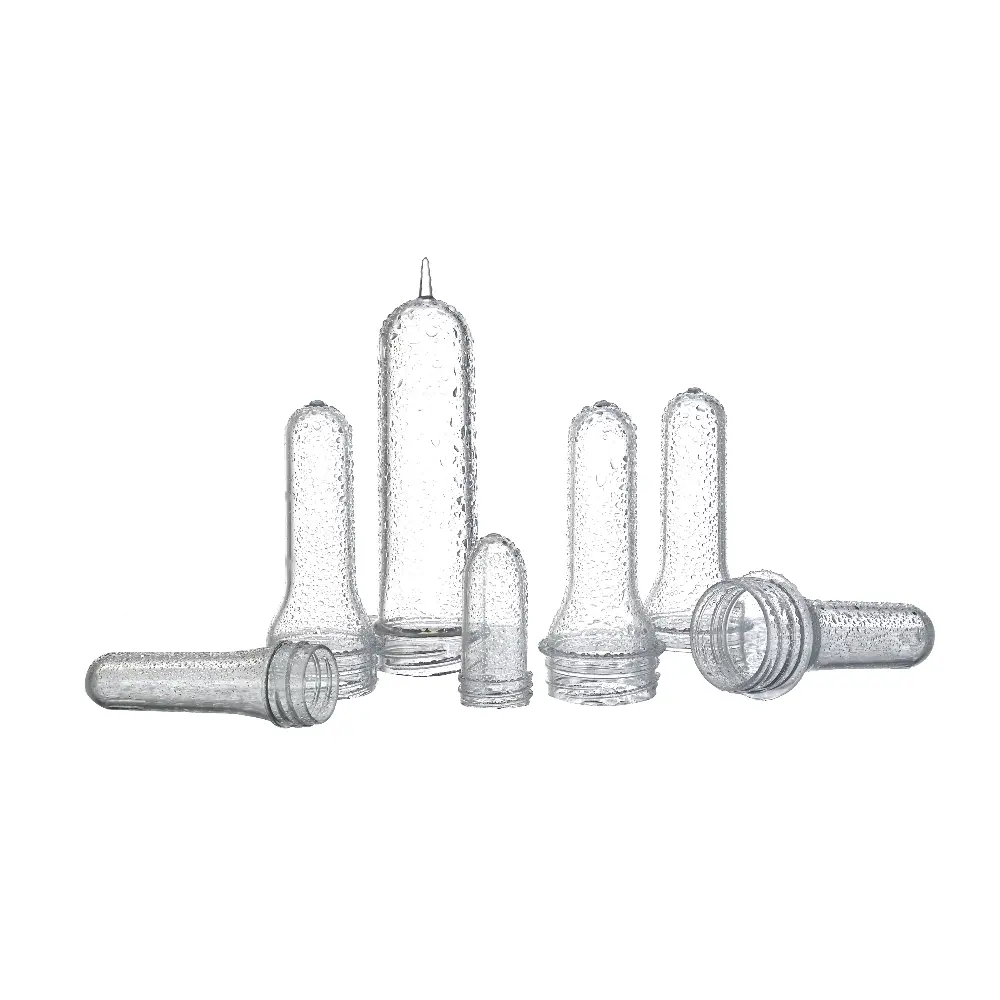
A PET preform is a small shape made of plastic. It looks like a test-tube. It heats up and blows into a full bottle. It is made from a plastic called PET, short for polyethylene terephthalate. A machine injects hot PET into a mould to produce each preform. And then it’s sent to a bottler or blown on site. The neck and threads of the bottle are already part of the preform. When blown, only the body of the bottle gets bigger.
At this first step the wall thickness, weight and neck shape are all determined. If this is wrong, then every bottle made from it will have the same problem. Because of this the mould is treated like a big long term tool. It’s not a cheap one-time part. For maximum quality preform PET moulds you need the most reliable preform PET manufacturer.
| Part or Detail | What to Know |
| Material | PET plastic (can include recycled PET) |
| Weight | About 8g to 50g or more, based on bottle size |
| Cavities per mold | 4 up to 100 or more |
| Neck shape | Set at molding; does not change later |
| Storage life | Often several months if kept dry |
How Do You Check a Supplier’s True Production Capacity?
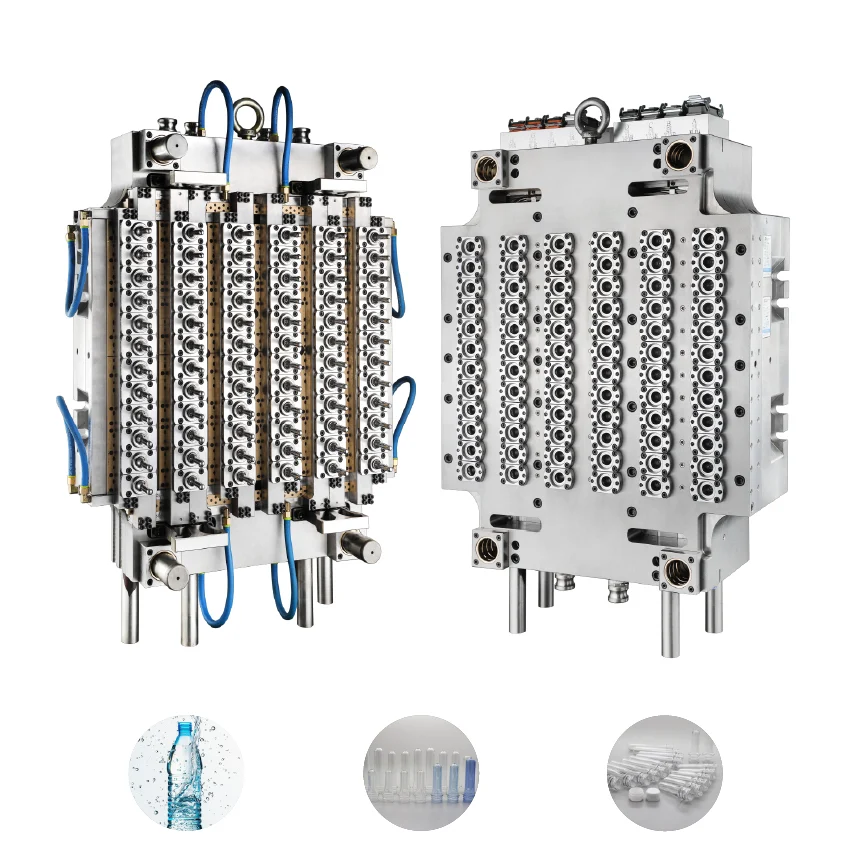
You check the real output by cavity count, cycle time and uptime. Don’t take what a supplier says about his annual output on trust. A 96-cavity mould with a 12 sec cycle produces far more preforms per hour than a 32-cavity mould on the same size machine. Cycle time also depends on the weight of the preform and the cooling rate of the plastic.
So the same number of cavities in two moulds can actually behave very differently. Always require prior cycle time data from a preform PET manufacturer. “Don’t choose the ‘best case’ number, which may not be how you actually use it.
| Mold Type | Cavity Count | Rough Output/Hour | Best For |
| Small mold | 4–16 | 1,000–4,000 pcs | Small brands, test runs |
| Mid-size mold | 24–48 | 5,000–15,000 pcs | Regional bottlers |
| Large mold | 64–96 | 15,000–30,000 pcs | National brands |
| Extra-large mold | 100–144 | 30,000+ pcs | Big co-packers |
What Are the Pros and Cons of High-Cavity Moulds?
The high cavity mould reduces the cost of each preform. But it also has that risk if one part goes down. The cost of a 96 or 144 cavity mould is spread over more units. Thus the price per preform declines with time. But if one cavity clogs or bends it affects a larger proportion of your total output than it would on a small mould.
- Plus: Lower cost per preform at real high output
- Plus: Less mould swapping on a long run
- Minus: More expensive to buy the mould at the start
- Minus: One bad cavity damages more units per cycle
- Minus: Repairs need more skilled staff
If your brand is making a few million bottles a year, a mid-size mould is often wiser. A high cavity mould only pays off if you keep your volumes high all the time.
What Quality Checks Matter Most in Preform Making?
The first thing to check is the wall thickness. If the bottle is blown, uneven walls will make weak spots. A good preform PET manufacturer checks wall thickness with a scanner on every shift, not only when the mould is new. Other key checks are gate quality, plastic dryness before melting, and the exact neck size. These simple checks catch most problems before bottles get anywhere near a filling line.
- Wall Thickness Measured At Several Points On Each Preform
- Plastic is inspected for moisture before it is fed into the machine
- Neck size checked so caps fit proper
- Visual inspection for spots, streaks or short shots
- Weight is often compared with the target number
What Are the Steps in Making a PET Bottle Preform?
The first step is drying the PET plastic. If a bit of water gets into the plastic it will spoil a batch. The dry plastic is melted and forced into a preform machine that holds the mould. Then it cools fast in the mould, and pops out.
- Dry the PET plastic fully
- Melt it, press it into the mould
- Allow to cool in the mould for the specified time
- Take it out and check the size
- Pack and keep in a sealed dry place
- Send it to the bottler to be blown
What Does It Cost to Set Up a Preform Plant?
Setup cost will mainly depend on machine size, number of cavities and the level of automation. So there is no real figure for all regions. A basic plant requires an injection machine, a mould, a plastic dryer and a gear to move material around. Price escalates rapidly with number of cavities and machine size. If you are seeking pet preform making machine price online ask for a real quote on your exact size and cavity count.
The listed prices online often leave out freight, setup and local rules that add to the real cost. The cost of power, particularly for drying and moulding, varies greatly by region. Separate out that cost from the machine price.
Which Places Lead in Preform Making?
China and India have the largest mould and moulding capacity in the world. However in the USA, preform PET manufacturers are often focused on shorter shipping to local bottlers. When you compare pet preforms manufacturers overseas to local manufacturers, you’re actually comparing two things: price and wait time.
Overseas mould makers are often cheaper and offer more cavity choices Local preform PET manufacturers reduce ship time and simplify communication during mould setup. Many big brands source their mould tooling from a strong overseas manufacturer and then run daily production near home.
Frequently Asked Questions
What is the typical preform weight for a 500ml water bottle?
A 500ml water bottle preform weighs around 9-13g. The exact weight depends on wall thickness, shape and the degree of toughness desired. A lot of brands are now going for the lower end of this range to save on plastic.
- still water bottles: ~9g-11g
- Bottled fizzy drinks: heavier, often 20g–28g to hold the pressure
- Wide-mouth or hot-fill bottles: typically heavier, for heat safety
What is the number of cavities of a high-volume mould?
Typically, a high volume preform mould will have from 64 to 144 cavities. The right number depends on how many bottles you need each day and the size of the machine. Smaller preforms mean more cavities in a single mould.
- 64-96 cavities: typical of national drinks
- 100-144 cavities: Used by large copackers
- 4–32 cavities: still normal for small or special packages.
What is the difference between a preform mould and blow mould?
The raw plastic is then shaped into the test-tube preform, using a preform mould. That preform is then blow moulded to produce the final bottle. They are two different tools used at two different steps. A common mistake for new buyers is to mix them up.
- Preform mould: forms the neck and base shape
- Blow mould: stretches and shapes the whole bottle
- Both moulds must match the same preform design to work together properly
How long does it take to change a mould?
Typically, a mould changeover on well-maintained equipment takes a few hours. The time will depend on the size of the mould and the machine set up. Large high-cavity moulds generally take more time to change over than small ones. Too many quick changeovers without care can wear the mould out quicker.
How long does it take to manufacture a custom preform mould?
Designing, building and testing a custom preform mould takes a few weeks to a few months. It will depend on the number of cavities and the complexity of the shape. Simple, low-cavity moulds run faster than large or odd-shaped ones. Always ask for a separate timeline for sample approval separate from the full production timeline.
Conclusion
Choosing a preform PET manufacturer depends on your risk, volume and how much control you want over your moulds. Cavity counts, quality checks and real cycle-time metrics are more important than a low price tag.
If you are seeking a good partner for mould-tooling, then Huadian Mould Co., Ltd. (Taizhou Huangyan Huadian Mould Co., Ltd.) is worth a look. The company is located in Huangyan, in the province of Zhejiang, a region of China well known for its mould-making expertise.