


What Documentation do PET preform mould manufacturers provide? This is the most common and vital question for the buyers. In my 10 years of experience in the PET preform mould documentation section I know the exact answers of your questions.
In this article I will cover what essential papers a reputable PET preform mould maker should offer. Technical drawings, steel certifications, design reports, and trial reports. Explore what each document proves. You may read a trial report before approving your shipment.
What Is PET Preform Mould Documentation?
PET preform mould manufacturer supply buyers with complete PET preform mould paperwork. These records show the mould meets specs. They also show the mould was tested before shipping. Good documentation includes design files, material certifications, process reports, and trial data.
Buyers verify sizes with these records. They ensure the mould fits the sketch. They say the mould is ready for manufacturing. Problems frequently go missed without paperwork. They may only appear when blow moulding preforms are operating. By then, repairs cost more.
Buyers may utilize ‘pet mould manufacturer’ or ‘pet bottle mould maker’. They usually imply “PET preform mould manufacturer.” However, these tools vary. Preform moulds mould raw preforms. Final bottles are blow-molded. Two distinct tools. Sometimes one firm builds both. Buyers may employ two vendors. Any excellent pet preform mould maker provides detailed documentation for their tools. This should be standard, not extra.
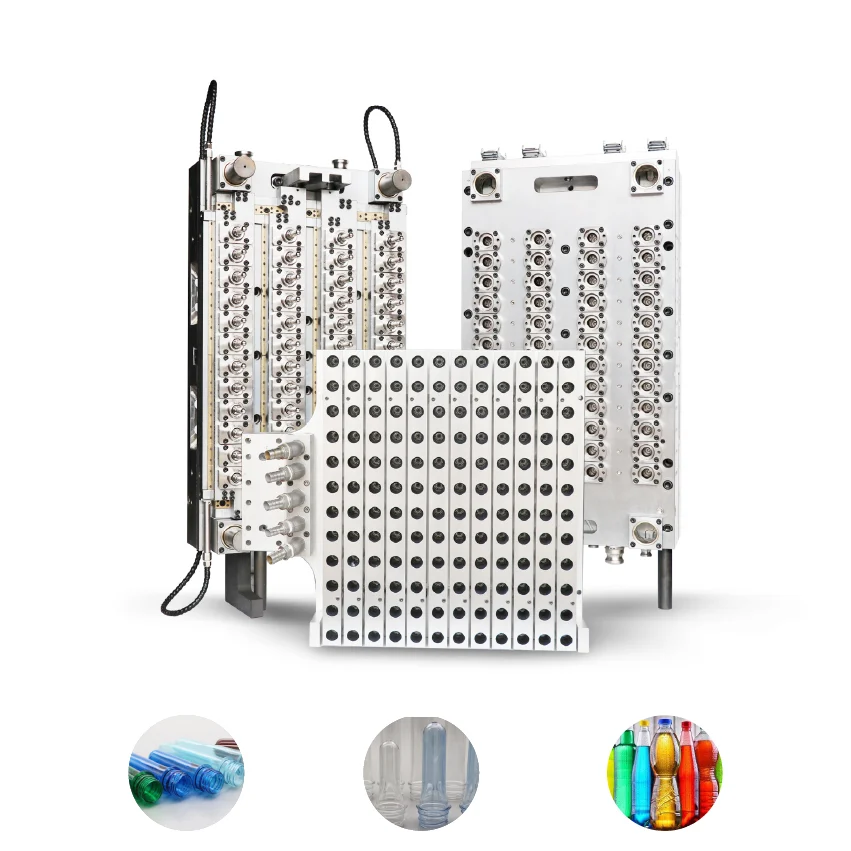
PET Preform Mould Documentations
| Document | What It Confirms | Typically Issued |
| 2D/3D Drawing | Dimensions, neck finish, and tolerances match the agreed spec | Before mould build starts |
| Steel/Material Certificate | Mould steel grade, hardness, and heat treatment | During or after machining |
| Mould Flow / DFM Report | Fill balance, gate placement, and manufacturability | Design stage |
| Trial (T1) Report | Preform weight, dimensions, and defects under real conditions | Before shipment |
| Warranty & Final Inspection Certificate | Final QC pass and coverage terms | At shipment |
What Does a PET Preform Mould Drawing Include?
A PET preform mould drawing is a technical drawing. It contains all sizes, tolerances and material notes. Both the preform and the mould which produces it are covered. There are two general kinds of drawings. One is a 2D drawing with key dimensions indicated. The other is a 3D model, typically a STEP or IGES file, which represents the full shape of the mould.
Buyers should check the drawing before the start of the machining. Cheap to change something on paper A change after the steel is cut is a whole lot more time and money. A good PET preform mould manufacturer should provide a complete drawing package.

Complete Drawing Package that Includes
- Drawing of preform with length, wall thickness and gate location
- Neck finish drawing showing thread, bore and support ledge sizes. This has to be an exact match for the cap and the blow moulding line.
- 3D model of mould with cavity, core and cooling channel arrangement
- A cavity layout drawing showing the number of cavities in the mould and their arrangement.
- A change log. This will track any changes made after the first drawing was approved.
Another thing buyers who work with pet blow moulding machine manufacturers should check is one more thing. Be sure to match the neck finish drawing to the blow side tooling also. This mismatch is a common and expensive surprise late in a project.
What Do Certificates of Analysis and Steel Certificates Prove?
A COA, or Certificate of Analysis, is a document. It checks that a batch of material meets its claimed spec, backed up by test data, not just a claim. Generally, a PET preform mould will need two certificates from the buyer. One is for the tool steel from which the mould is made. One is for the resin used on trial runs.
The steel certificate is the most significant one. This shows the life of the mould. It also shows how close tolerances are held over many cycles. Your choice of steel grade will be determined by your budget and how many you need to make. A reliable PET preform mould manufacturer will tell you what grade they used and why.
| Steel Grade | Typical Hardness | Rust Resistance | Best Fit For |
| S136 (stainless) | 48–52 HRC | High | Long runs, clear preforms, humid climates |
| P20 (pre-hardened) | 28–32 HRC | Moderate | Lower-volume or budget-sensitive moulds |
| H13 (hot work steel) | 46–52 HRC | Moderate | High-cavitation moulds with heavy thermal cycling |
| 420 stainless | 50–54 HRC | High | Cavity and core inserts needing polish and corrosion resistance |
Harder, rust-resistant steels such as S136 or 420 stainless that cost more upfront. They require less upkeep and polishing over time, however. P20 is more economical for short or seasonal runs. How many cycles you expect to run determines the best choice. It should not be decided by price alone.
What Happens During a PET Preform Mould Trial?
This trial is often called a T1 trial for a PET preform mould. This is the first actual production run of the finished mould, on a real injection moulding machine. It verifies the tool functions as intended before it’s released. Here is an example of how a typical trial might go.
An Illustrative Trial Scenario
If you have a 48-cavity 500-ml water bottle mould. Polishing and machining finish. Then the mould is inserted in a PET preform injection moulding machine manufacturing process. The resin is dry PET. Hygroscopic PET absorbs atmospheric moisture and must be dried. Injecting wet resin degrades it. The PET preform mould manufacturer tracks shot weight, cycle time, and cavity comparisons.
They then measure sample performances. Trial time varies on mould complexity. It takes weeks from the first injection to acceptable samples, trials, and approval. Send test samples, PET preform mould manufacturer. A documented report with measured measurements and weights is required. They also offer a brief trial film. This lets the customer inspect the mould before shipping.

A trial report should include
- Preform weight for each cavity against the target weight and tolerance
- Neck finish dimensions, compared to drawing
- Visual defect notes such as short shots, black specks or uneven wall thickness
- Cycle time and injection parameters applied during the trial
- Photos or video of the trial run and the sample preforms
- Common Errors Buyers Make When Reviewing Mould Documentation
Major Mistakes When Reviewing Mould Documentation
- Approve drawing without checking neck finish vs actual cap or blow moulding line spec.
- Acceptance of a steel certificate for grade only. And it should also cover hardness and heat treatment.
- Not writing the report of the trial. Weight or size data cannot be shown by photos alone.
- Not comparing the trial resin to the production resin. The filling and cooling of a preform is dependent on the type of resin.
- Treating the warranty as boilerplate. Always check what it covers and for how long.
Frequently Asked Questions
What is a T1 trial report in mould manufacturing?
A T1 trial report is the written record of the first production run of a mould. It lists the preform weight, sizes and any defects found. It gives the buyer real data to check before the mould ships, instead of some vague note that “the trial went good.”
- Includes measured weight per cavity vs tolerance
- Includes neck finish and dimensional inspection
- Often combined with trial video/photos
What is the best steel for PET preform moulds?
The best steel depends on what volume you want to make. For long, high volume runs, rust resistant grades like S136 or 420 stainless steel are good. P20 is usually the way to go for lower volume or budget projects.
- S136 and 420 Stainless Steel Longer polish retention and corrosion resistance
- P20 reduces tooling cost for shorter production runs
- H13 has good thermal cycling for high cavitation moulds
What is the distinction between a 2D drawing and a 3D mould file?
A 2D drawing contains flat views with sizes and tolerances. Used for manufacturing and inspecting parts. A 3D mould file is a digital model showing the complete shape of the cavity, core and cooling layout. They have a tendency to aggregate. 2D file is used for measuring. The 3D file is used for design review and machining.
- 2D drawings contain the exact tolerances for quality checks
- 3D files (usually STEP or IGES) to support machining and simulation
- Request both prior to signing off on a design
Number of cavities in PET preform mould?
PET preform moulds may have between 1 cavity to about 144 cavities. The right number depends on the production volume and the capacity of the injection moulding machine. The more cavities a mould has the more it costs to make. But they bring down the per preform cost when produced at scale.
- Small brands will typically start at 8 to 32 cavities
- Large-scale bottlers may run 96 to 144-cavity moulds
- Cavity count must be compatible with the clamping tonnage and shot size of the injection moulding machine
Conclusion
Good documentation changes a mould purchase from a guess into a checked process. Honest material certificates, a complete drawing package, and a data-backed trial report help buyers catch problems early. This is much better than finding them months later on a live production-line. These by themselves do not ensure a perfect mould. But if they are absent, that is a very clear warning sign.
Huadian Mould Co., Ltd. is a top PET preform mould manufacturer they prepares complete documentation for each project. This includes full drawings, steel certification and detailed trial reports before any tool ships. Buyers get real data to make their decision, not a sales promise.