


Have you ever wondered what’s the riddle of why two similar pet preform injection molding processes can provide such different quality? I have personally seen this gap in my 8 years of experience in the PET preform mould industry.
This article contains instructions for installation of the hot runner, selection of the valve gate and optimization of the pressure. You will also find practical examples, advice from industry professionals and essential design guidelines to help you get the most out of your pet preform mould system.
What is PET Preform Mould and How Does It Work?
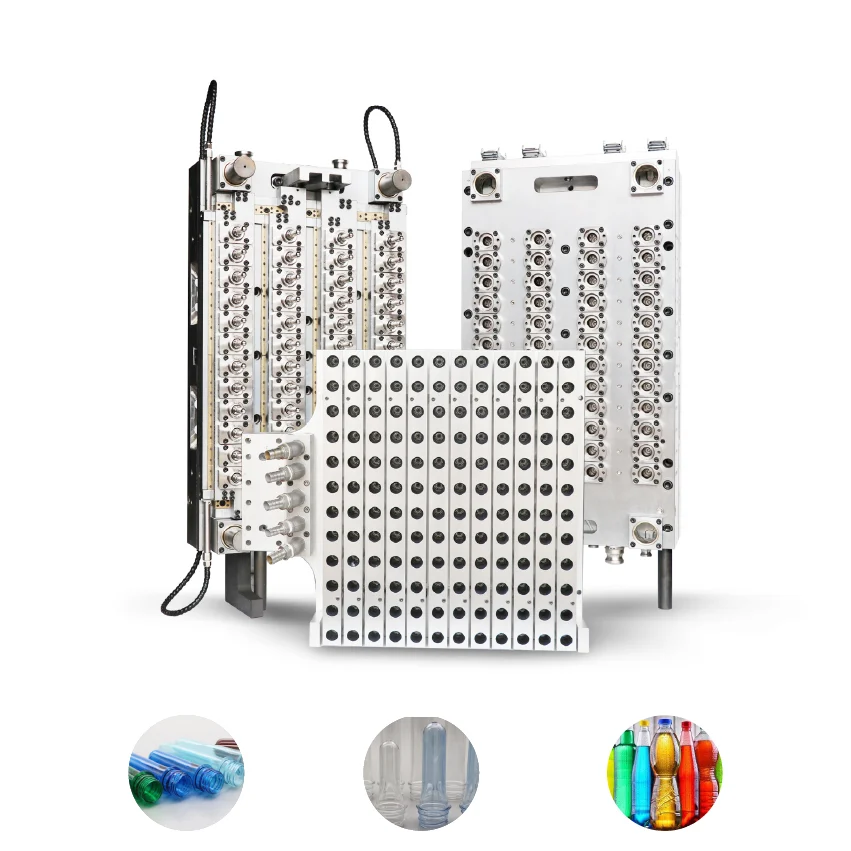
PET preform mould is one of the precise tools used in PET preform injection molding, it is used to shape molten PET resin into preform. The preform is then molded into a bottle. The mold is equipped with a hot runner system, cooling channels, cavities and an ejection system. It requires teamwork. The quality of product is greatly affected by the design of mold and production parameters. Uncontrolled temperatures can lead to haze, tension, or wall thickness variation.
It is important to balance the cavity and position the gate properly to obtain a uniform fill. Also, the injection molding equipment must be compatible with pet preforms mold specifications. Clamp force, shot weight and speed are important considerations when plasticizing. A good mold design can cut down manufacturing time, energy consumption and scrap.
PET Preform Mould Technical Performance
| Parameter | Hot Runner System | Valve Gate System | Cold Runner System |
| Temperature Control | Precise zone control | Valve-regulated heat | No active control |
| Material Waste | Near zero waste | Minimal waste | High runner waste |
| Cycle Time | Faster cycles | Optimized cycles | Slower cycles |
| Initial Cost | High investment | Medium-high cost | Low initial cost |
How Does Cavity Design Affect PET Preform Quality and Output?
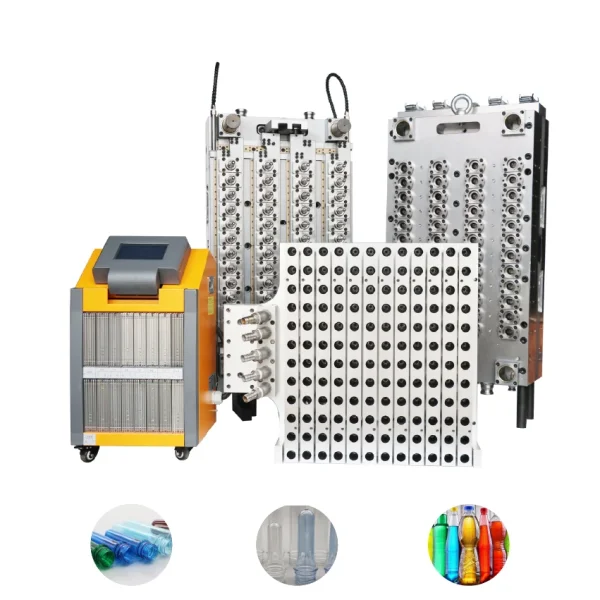
The cavity is one of the many important parts of designing a pet preform mould. In the end it’s all about the number of cavities, their arrangement and the shape of the gate. More cavities mean more output, but they also require more precision and stability. An uneven arrangement will lead to uneven filling and visual defects. All cavities should have equal wall thickness.
If there is a difference of 0.1mm the part can be rejected in stretch blow molding. The position of the gates also determines the flow of material into the various cavities. The strategically positioned gate can minimize the weld lines and internal tension.
Single-Cavity vs. Multi-Cavity vs. Stack Mould
| Factor | Single-Cavity | Multi-Cavity | Stack Mould |
| Output Volume | Low to medium | High volume | Very high volume |
| Tooling Cost | Low cost | Medium cost | High cost |
| Best Use Case | Prototypes, trials | Mass production | Ultra-high output |
| Maintenance | Simple, easy | Moderate effort | Complex servicing |
Prototypes and low volume runs are best suited to single cavity molds. If you want to produce conventional bottle preforms in bulk then multi-cavity molds are your best bet. Stack molds require the most complicated balance but yield the maximum output per machine hour. Make the best decision based on your budget, volume objective and machine capacity.
Advantages and Disadvantages of Multi-Cavity PET Mould Systems
Advantages:
- More productivity per cycle means lower unit costs
- Better return on investment with larger runs of manufacturing
- Optimal part balance for consistent quality
- Reduces the total number of hours of machines needed to achieve the established quantities
Cons:
- Higher tooling costs Longer manufacturing lead times
- Needs more precise process control and operators with the right skills
- Better maintenance and restoration of cavities
- Balance problems might give different reject rates for different cavities.
Industries That Use Multi-Cavity PET Preform Moulds
CSD and water bottles are made in the beverage industry with 48 to 96 cavities. Sauce and condiment manufacturers need medium-range cavity molds. Personal care companies often use smaller cavities to hold shampoo and lotion containers. The pharmaceutical industry depends on low-cavity precision molds for vials and closures.
How Do Hot Runner and Valve Gate Systems Boost Mould Performance?
The hot runner system is a critical part of the pet preform molding machine configuration. As a result, there is no cold runner waste, and the resin stays molten in the manifold. That lessens cycle time and material. Valve gate systems add another level of control by using a pin system to open and close the gate precisely . This way an integral part of the bottleneck quality, gate vestige, is eliminated. Combining hot runner and valve gate systems reduces post-processing and improves part consistency. Today they are the industry standard for high output pet preform molds.
Pressure Optimization Parameters in PET Hot Runner Moulds
| Pressure Type | Typical Range | Effect on Part | Common Problem |
| Injection Pressure | 800–1400 bar | Fills cavity fully | Flash or short shots |
| Holding Pressure | 40–60% of inject | Controls shrinkage | Sink marks appear |
| Back Pressure | 5–20 bar | Improves melt mix | Degradation at high |
| Clamp Force | Mould-specific | Prevents flash | Parting line damage |
Hot runner systems are also great for reducing waste when it comes to high-volume beverage lines. Valve gate systems provide increased accuracy for pharma and cosmetic preforms. For complex or multicavity configurations staged pressure control is the way to go. Auto-adjust pressure may be handy for plants that operate 24/7 and have little downtime tolerance.
Key Benefits of Hot Runner and Valve Gate Technology
- Reduces raw material costs and eliminates waste from runners
- Cycle time reduction through faster opening and closing of gates.
- Stops drool, gate stringing and leftover material on the surface of the neck
- Improves balance of large molds with 48-144 cavities
- Keeps melt temperature constant. Reduces power consumption.
Hot Runner Temperature Zone Strategy by Mould Section
Every section of hot runner requires its own temperature setting. The manifold and the nozzle tips are at different temperature. The sprue bushing Incorrect zone settings may cause premature freezing or damage. Regular calibration of the thermocouples keeps all zones accurate. Leading pet preform injection moulding machine manufacturers are currently offering integrated temperature controls for real time management.
What Are the Best Practices for PET Preform Mould Pressure Optimization?
Pressure control is a widely ignored aspect when it comes to making a pet perform on an injection molding machine. Using the wrong pressure can cause parts to deform, flash or have brief shots. The injection pressure must fill the cavity completely without overpacking. Then when the part cools the holding pressure will counteract the shrinkage. The back pressure setting is important as this affects the evenness of the melt. Any change in wall thickness, gate diameter or PET grade will require a new pressure profile. Systematic process audits help spot early signs of drift. In terms of pressure stages, investment in servo-driven machinery improves repeatability.
Case Studies: PET Mould Pressure Optimization Results
| Case | Application | Challenge | Solution Applied | Result |
| Case 1 | 500ml Water Bottle | Gate vestige issue | Valve gate retrofit | Zero vestige, cleaner gate |
| Case 2 | CSD Bottle Preform | High cycle time | Hot runner upgrade | 22% faster cycles |
| Case 3 | Oil Container Mould | Uneven fill pattern | Pressure profiling | Uniform wall thickness |
| Case 4 | Pharmaceutical Vial | Contamination risk | Clean room mould design | FDA-grade preform output |
Best Practice Checklist for PET Preform Pressure Optimization
- Preheat the injection site based on the cavity volume and wall thickness.
- Increase holding pressure to eliminate sink marks and voids.
- Be aware of the clamp force so that you do not flash the parting line.
- Use staged pressure profiles for complex or multi cavity molds.
- During production, all transducers and sensors will be reset on a quarterly basis.
PET Mould Pressure Troubleshooting Quick Reference Guide
Short shots result from low injection pressure or rapid cooling. In most cases, flash is either a sign of worn separating surfaces or high injection pressure. The sink marks tell us that the holding pressure or hold time is not sufficient. Burn marks are evidence of either trapped air or an excessive melt temperature. You can reduce scrap and rework time by fixing each problem and adjusting the pressure. Keep an accurate process database for your collaborations with pet preform mould manufacturers and write down any changes.
Frequently Asked Questions
How does the valve gate work to improve the quality of the neck finish of the PET preform?
The valve gate closes the gate smoothly after each shot. Thus the neck finish region is protected from the gate vestige. It is important to have a clean neck space for good cap sealing and bottle integrity.
- Stripping out the root of quality rejections stringing
- Uniform gate mark in each cavity is guaranteed.
- Reduces handling and cutting after molding
Why are the wall thicknesses of PET preforms different?
Uneven wall thickness may result from a core misalignment or an unbalanced cavity. There is also a role of erroneous profiles of injection speed and pressure. This problem can be avoided by checking the alignment of the cavities regularly and maintaining the moulds.
- Use measuring tools to check if it’s in the center.
- Check the filling level with cavity pressure sensors
- Runner geometry modification to improve flow dispersion
How do I determine the better choice for a PET preform?
When every bit counts, the hot runner is the best choice for large scale manufacturing. When production is low and tooling costs are a concern, cold runners are the way to go. A hot runner is what most modern pet preform mould makers recommend if you are producing more than half a million units per year.
- Fast running: low unit price, high tooling cost
- Cold runner method : less up front cost , more material wasted .
- For medium volume custom preforms, a hybrid approach may be the best method.
What is the best holding pressure of molding the PET preforms?
The preferred holding pressure is forty to sixty percent of maximum injection pressure. If the holding pressure is too high, there will be residual tension. Too low results in dimensional variation and sink marks .
- Start at 50% of max, then increase injection pressure as required.
- Watch the part weight to confirm that the hold settings are correct.
- If sink marks are still present after increasing the pressure, hold for longer.
What is the service and inspection interval for PET preform molds?
Thoroughly check every half million to a million cycles. Main protection is blockage of cooling channels, gate erosion and cavity wear. It’s easy to find the right replacement parts and service support with a seasoned pet preform mould maker.
- Look for any wear or erosion on the gate inserts.
- Flushing removes scale from cooling passages.
- Check the alignment and surface condition of the ejector pins.
Conclusion
Optimizing the design of a pet preform mold is an ongoing process that involves calibrating the hot runners, setting up the valve gates, profiling the pressure and performing routine maintenance. There are benefits to making improvements, reducing scrap, saving energy and improving production quality. Coordination of the mold, machine and process parameters leads to optimal performance.
If you want a reliable company to build or upgrade the tooling for your pet preform injection moulding plant, then Huadian Mould Co., Ltd. is the company you should consider. With their precise engineering, hot runner knowledge and long-life mould construction, they have become a leading maker of pet preform moulds.