


Why does blow moulding one preform cause a crack at the neck but another preform fills the mould cavity clean every time? This is a question I get asked a lot about plants that make wide mouth jars. The answer is often the mould design, not the plastic.
Those who work with tools for years learn one thing quickly. A jar preform mould for a narrow bottle neck cannot be used for a wide-mouth jar. It changes the shape of the neck, the wall thickness and the cavity balance.
It considers the influence of neck size and width on wide-mouth jar design. It also discusses the most important parts of a mould, common mistakes when buying and how to find a good supplier.
What Is a Jar Preform Mould?
A jar preform mould is a device that forms hot PET plastic into a small tube like preform. This preform is later reheated and blown into the final jar shape. The mould is between the raw plastic and the finished jar.
The preform shape, wall thickness and neck size are dictated by the mould. Small trial tools may have some cavities. Big production tools can have over 96 Water channels inside the mould quickly suck out heat. Uneven cooling can cause the neck to warp or thin out.
Most jar preforms are made from PET plastic, the same type used for drink bottles. A good pet preform mould makes the wall a uniform thickness all the way around. This is even more so with wide-mouth jars as a wider opening removes some of the natural strength provided by a narrow neck.
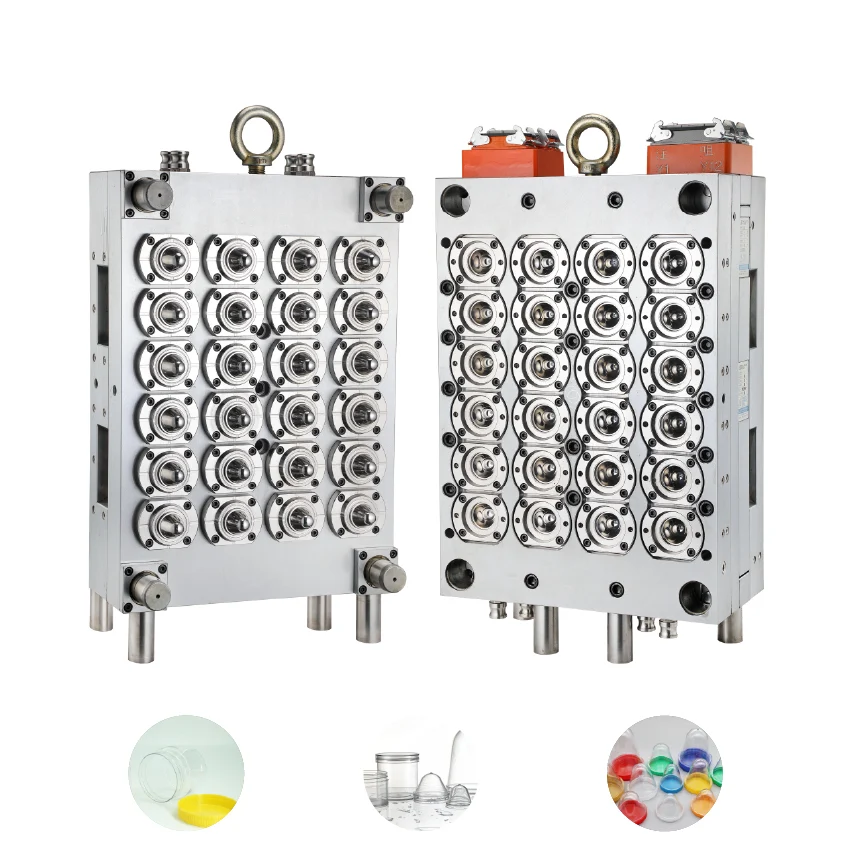
Key Facts About Jar Preform Moulds
| Feature | Typical Range or Detail |
| Cavity count | 1 to 96+ cavities per tool |
| Steel type | Hard tool steel, often with hard chrome coating |
| Cooling method | Water channels inside, often chilled to 4–8°C |
| Common resin | PET (food-safe grade for cosmetic and food jars) |
| Neck finish types | Screw thread, snap-fit, and wide mouth finishes |
How Does Neck Size Affect Wide Mouth Jar Design?
The most important thing about a wide-mouth jar is neck size. It governs the opening size, the cap fit and the preform stretch during blowing. An insufficiently deep neck will not hold a lid tight. One too deep can break under twisting force.
Wide mouth jars typically have necks between 38mm and 100mm wide. Narrow-necked bottles are generally only 24mm to 30mm. The larger the hole, the more plastic there is around it. So moulders put in an extra support rib near the neck to stop it from deforming.
Common Wide Mouth Neck Size Standards
| Finish Size | Typical Use | Thread Type | Notes |
| 38mm | Small cosmetic jars | Screw thread | Common for cream jars |
| 43mm | Food and supplement jars | Screw thread | Good mix of grip and seal |
| 63mm | Bigger jars, wide scoop access | Screw thread | Needs stronger gate design |
| 89mm+ | Bulk jars, wide mouth use | Screw or snap fit | Needs careful, even cooling |
Getting this size right at the preform stage saves work later on. Pet preform mould designs which avoid neck stress points often give preforms which appear fine at first glance. But they fail when inflated and filled.
Which Industries Use Wide Mouth PET Jars?
Wide-mouth jars appear in packaging where people need to scoop or dip into the jar, rather than just pour from it. This one requires shapes for almost every choice made about the mould.
- Cosmetics and skincare- creams, balms and scrubs require access with fingers or a spatula. A lot of times brands will have a custom cosmetic jar mould built just for their jar shape.
- Food and supplements– Protein powder, nut butter and pickles all have wide openings for a scoop or spoon.
- Personal care- bath salts and body scrubs also have wide necks so you can easily reach the products.
- Home and industrial use- some cleaning pastes and grease also use wide mouth PET jars for the same reason.
Each of these areas stresses the mould in different ways. Cosmetic jars often have fewer cavities, but require tighter finish sizes. Food jars are usually on the larger side and need a bit more room but they do require strict food safe plastic.
How Does a Hot Runner Mould Help Wide Mouth Jar Production?
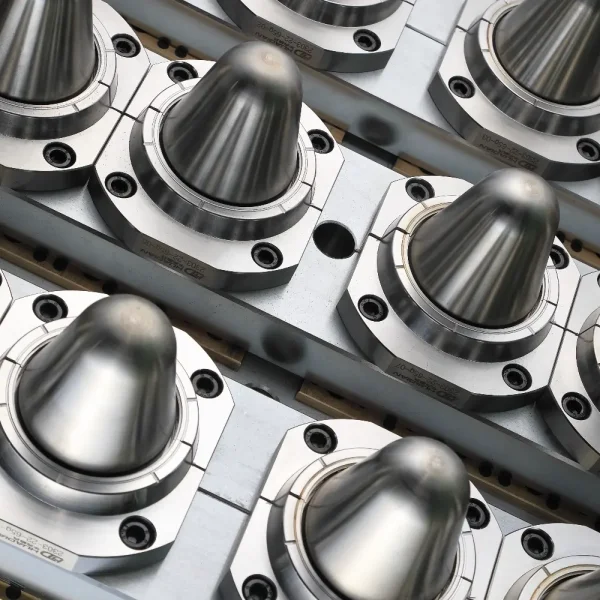
A hot-runner pot does the moulding and keeps the plastic hot on its way from the machine to each cavity. It does not cool and solidify in a cold channel, which is subsequently cut off. This reduces waste, and speeds up each cycle.
- Less waste- no cold runner to cut off and remelt every time.
- Faster cycles- same melt heat in all cavities means less wait time.
- Better balance- each cavity receives plastic at nearly the same temperature. This is especially true of wide-mouth tools, where large openings expose flaws more easily.
- Lower cost over time- The tool is more expensive to buy upfront, but the savings from plastic add up on long runs.
Hot runners are more advantageous for wide-mouth jars than narrow-neck jars. The larger gate near the neck requires even heat or it might show sink marks or excess flash.
What Mistakes Should Buyers Avoid?
The change in the neck shape of the mould design is often missed by buyers. Only after a full production run has already begun do they discover this. Once the steel is cut, it is a lot more expensive to fix than to fix it on paper.”
Common Buying Mistakes
- making another narrow neck mould to copy a design as opposed to making a new neck support for a wide opening.
- Cavity count based on machine size only, no verifying that cooling is capable of handling a bigger neck.
- Avoid test runs before paying for full production steel.
- Assuming that any preform moulding machine can run any mould without checking the clamp force and shot size.
- Flow tests that can detect thin walls or short fills before steel is cut can be by-passed.
A drawing cannot show problems that even a short test run, a small one, will often show.
How Do You Pick the Right Jar Preform Mould Factory?
The right factory can give you real cavity balance data, not just one good sample jar. One sample to prove that the part can be produced. Balance data suggest you can do it the same way. Again and again.
Ask any jar preform mould factory for 3 things: a cooling layout drawing, a fill balance report for all cavities and names of previous customers with a similar neck size. If a factory is slow to share these, look closer before signing.
It is also good if the factory does its own in-house blow-moulding preform trials instead of sending tools out for trials. Faster fixes are often possible with in-house testing if one cavity does not perform well once production is underway.
Frequently Asked Questions
What is the difference between a preform and a final jar?
The middle step is the preform. It is a small tube like part made by injection moulding. It is heated and pulled into the shape of a finished jar.
- Preforms are thick-walled and solid bottomed.
- Finished jars are thin-walled and are in the shape of the final jar.
How many cavities does a typical jar preform mould have?
A typical mould for a jar preform has from 1 to 96 cavities. Small test tools usually have 1 to 8 cavities. Large production tools are often 32, 48 or 96 cavity.
- More cavities means a cheaper price per part in high volume.
- More cavities also means a higher cost to build the tool.
Why do wide mouth jars need more neck support than bottles do?
Wide mouth jars require more neck support due to their larger opening removing more plastic from the neck area. The result is a weaker neck than on a narrow-necked bottle. To correct this, mould makers add support ribs and modify the wall size near the neck.
- Wide openings can have a cap twist that cracks thinner necks easier.
- This support is incorporated into the mould, not added after the jar is made.
What plastic do most jar moulds use?
Most jar moulds are designed to run PET plastic. PET was chosen for its clarity, strength and recyclability. Both food and cosmetic safe grades of PET are common.
- Pet food-safe certified for food jars
- Cosmetic jars can be made with tinted or special PET types.
How long does it take to make a custom jar preform mould?
The custom jar mould takes 30 to 90 days to build. It all depends on how many cavities it has and how complicated the design is.” Simple single cavity test tools are faster than big production tools.
- Hard neck forms or textured surfaces increase build time.
- Test runs and minor fixes can also be time consuming.
Conclusion
The quality of a wide-mouth jar is determined long before it leaves the blow moulding line. It is determined at the jar preform mould stage in the neck shape, cooling layout and cavity balance. Getting it right early on avoids costly fixes down the road.
Huadian Mould Co., Ltd. is worth a look if you want this groundwork to be done well. They can handle a lot of neck sizes and they were happy to run test shots and share cavity balance data early, so they’re a solid choice for anyone moving a wide-mouth jar idea into real production.