



So many buyers ask the same thing. Can bottle preform manufacturers change the neck finish of a preform to fit their old caps? Or do they need a different mould? That is a smart question to ask. The neck finish controls cap speed, seal quality and fit.
Custom neck finish work is common in PET packaging. Makers can change the thread, size and shape of the seal. This allows a preform to match your caps or a brand new design.
This guide describes the workings of bottle preform manufacturers. It demonstrates how neck thread and size influence cap fit. It also discusses the making process and how to select a reliable manufacturer.
Who Are Bottle Preform Manufacturers?
Bottle preform manufacturers are companies that produce small PET blanks. These blanks resemble test tubes. Heat and air then make them into full bottles. That blank is known as a bottle preform mould. The neck and the thread are made from the start. That part never changes its form when it is made.
This is why the neck has to be exact. If the thread size is off the cap won’t fit properly. It might be leaking, even if the rest of the bottle looks okay..
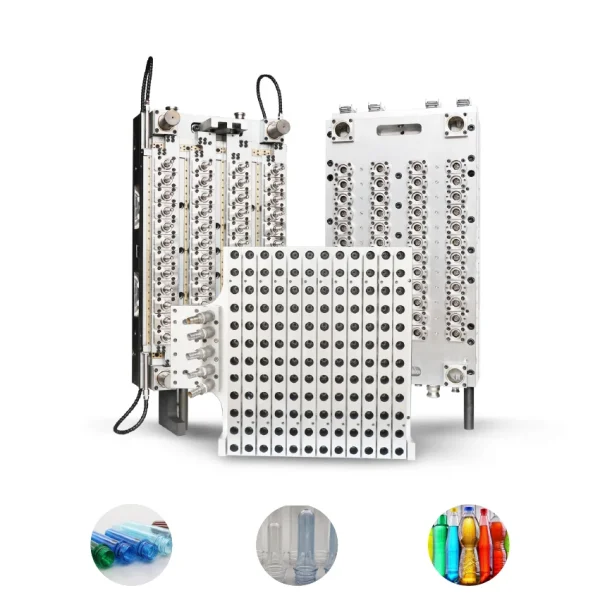
Preform Basics at a Glance
| Attribute | Typical Detail |
| Material | Virgin or recycled PET resin (rPET) |
| Common weight range | 8g to 50g+, depending on final bottle size |
| Neck finish | Fixed at preform stage; unaffected by blow molding |
| Production method | Injection molding using multi-cavity tools |
| Common industries served | Beverage, personal care, household chemical, pharma |
Which Neck Finish Types Can Preform Manufacturers Produce?
Bottle preform manufacturers make many different types of neck finish. This is one of the simplest parts of the mould to change. The neck finish has three parts, the thread, the size, and the shape of the seal under the cap.
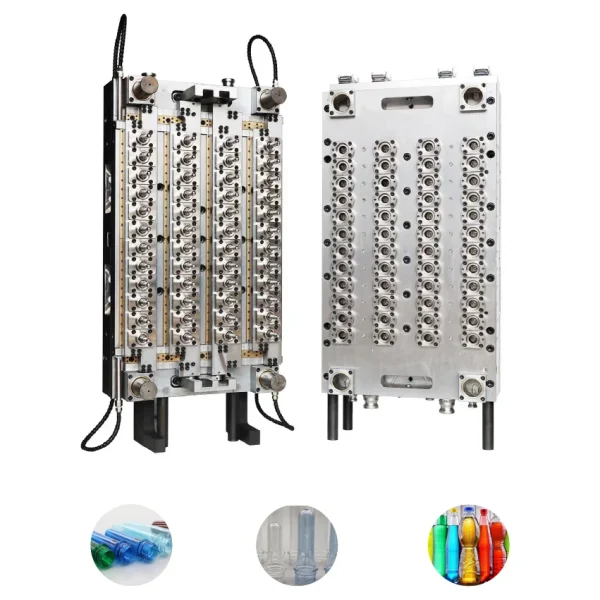
Common Types of Neck Finishes
Common types of neck finishes include:
- PCO 1810 a light finish for soda and other carbonated drinks
- PCO 1881 a lighter, shorter version of PCO 1810, common in still and sparkling water
- 28mm finishes (28/410, 28/415) – often used on shampoo and cleaning bottles
- 30/25 finish used on cooking oil and some food packs.
- Aluminium ROPP finishes (24mm, 28mm) – to be used where a metal tamper-proof cap is required
Each type of finish has a different thread size and depth. So a change in finish usually just means a new neck insert. That doesn’t always mean a whole new mould.
How Does Neck Diameter Affect Cap and Closure Compatibility?
Cap fit is determined by neck diameter. Even a slight change can make a cap too loose or too tight. Measure the diameter in millimetres across the outside of the thread. It is combined with a thread pitch number, which is a number indicating how many threads are in each turn.
Neck Finish and Cap Compatibility Chart
| Neck Finish | Thread Diameter | Common Cap Type | Typical Bottle Use |
| PCO 1810 | 28mm | Sport cap, flat cap | Carbonated drinks |
| PCO 1881 | 28mm (shorter neck) | Flat cap, sport cap | Still and sparkling water |
| 28/410 | 28mm | Flip-top, disc-top | Shampoo, lotion |
| 30/25 | 30mm | Screw cap with liner | Cooking oil |
A cap made for one size does not fit another size. And this is true even when the numbers are close. That is why brands should send a real cap sample first. Spec sheet works too. This saves time and cost before a new mould is built.
How Are PET Preforms Made From Start to Finish?
The PET resin is dried in the initial step of the PET bottle preform manufacturing process. Then the dry resin is placed in a steel mould. This occurs at high heat and pressure. The mould has many slots that are called cavities. Here, in this one step, the neck and thread come together. “Nobody ever puts the thread on later.
Step-by-Step Preform Manufacturing Workflow
The general workflow is as follows:
- Dry the PET pellets of water, wet pellets make weak plastic
- Melt the dry resin and inject into a precision steel mould
- Quench mould fast, this locks neck thread and body shape
- Eject the preforms, inspect, pack for shipping or blow moulding
Every step is supported by good machines. Behind this work is the press and mould system that a bottle preform making machine manufacturer built. And that’s why every run gives the same result, over and over again. Mould precision means the neck comes out right, every time.
How to Choose a Reliable Preform Bottle Manufacturer
There are three things that matter when choosing preform bottle manufacturers. Can they make a good mould? How do they handle resin? Will they support a custom neck job, sample to full run? A company that only does stock necks may not work for a brand that already has a set cap.
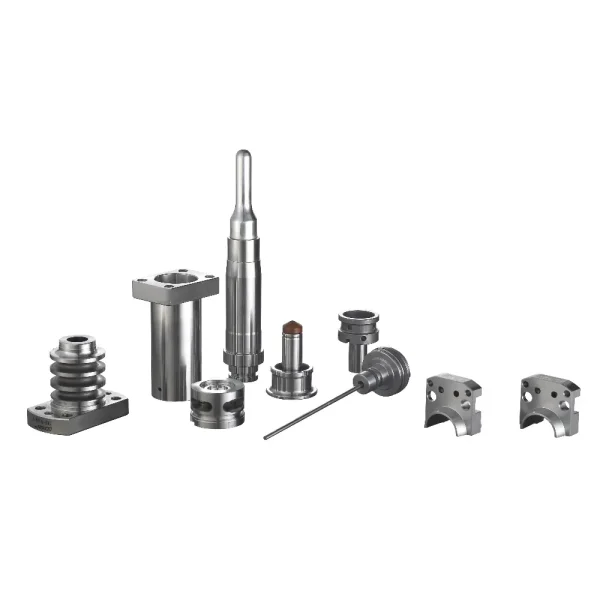
Supplier Evaluation Checklist
Some practical checks before you choose a supplier:
- Ask for a real sample preform and test your cap on it. Don’t just ask for a drawing.
- Custom preform bottle manufacturing runs – check minimum order size
- Make sure that the number of cavities in the mould matches the number of units required
- What’s the turnaround on a mould fix if the first sample is wrong?
Many top pet bottle preform manufacturers are working with a trusted bottle preform making machine manufacturer china network. This keeps the mould waiting time short. It also reduces the cost for overseas buyers. Working with a proven bottle preform making machine manufacturer in China gives more choice too, with more options on cavity count and resin type.
Frequently Asked Questions
What’s the Most Common Finish for Water Bottle Necks?
PCO 1881 is the most common neck finish for water bottles, a 28mm finish. Not as plasticky as older finishes. The shorter neck also reduces the cost per bottle.
- It fits standard flat caps and sport caps
- Enjoyed for both still and sparkling water
- Suitable for most high speed capping lines.
Can preform makers change the neck finish without a new mould?
No. Often a neck change necessitates a new or fixed mould insert. The neck is shaped by the mould cavity. You need a tool change to match a new thread or size.
- Some moulds use swap-in neck inserts to lower cost
- Full new cavity required for large size change
- Normally, before full runs are begun, approval of samples is required
How long does it take to develop custom preform tooling?
Custom tooling often takes a few weeks to several months. It depends on the cavity count and design. A large multi-cavity mould runs slower than a small one-cavity sample.
- Sample moulds are typically faster than full production moulds
- Complex neck finish adds design and test time
- Lead times can vary by maker and their current order load
What is the difference between PCO 1810 and PCO 1881?
The main difference between PCO 1810 and PCO 1881 is neck height and plastic weight, not thread size. Both take a 28mm thread. PCO 1881 however has a smaller neck and therefore uses less resin.
- PCO 1881 is usually lighter and more economical
- PCO 1810 is still prevalent on some soda lines
- The cap fits a little differently between the two kinds
Do the preform manufacturers make the caps also?
Some preform producers also offer caps and closures. Other companies make only preforms. Learn about this early. If you buy caps from individual suppliers, you still need to know the exact size and thread info to make sure they fit.
- Paired supply makes it easier to check quality
- More choices in cap styles with separate purchase
- Always check the thread fit both ways, before you order.
What goes into the price of a custom preform mould?
Custom mould costs are mainly based on cavity count, neck design, and steel grade. More cavities mean more up-front cost . But, as you scale up, the price per unit drops.
- More cavities speed up the output but increase the tooling cost.
- The more complex the neck shape the more machining time it takes.
- The resin type and colour also affect the ongoing unit cost.
Conclusion
A custom neck finish is a neat way to fit your caps, or a new closure design. This is normal, everyday work in the industry, not some rare request to the bottle preform manufacturers. Nailing the thread type and size at this point avoids cap problems far before bottles see a filling line.
If you need such a partner for this kind of work, Huadian Mould Co., Ltd. is worth a look. They are specialists in high accuracy mould work for PET preforms, including necks. On their website, they display their mould skills for buyers to compare.