



Can a 64 or 96 cavity mold make preforms as consistently as a one cavity mold? This question arises every time a producer wants to increase PET preform output. This article is about the engineering of a high volume cavities PET preform mold. This is the real deal in precision tooling, not any individual supplier’s sales pitch.
It explains what the cavity count is, how pressure balance is built into multi-cavity molds and when a single or double cavity mold still makes more sense. More cavities means more output. But they also mean more places where wall thickness can go wrong, all at once, in the same shot.
What Does “Cavity Count” Mean in a PET Preform Mold?
Cavities PET preform mold is the number of preform-shaped cavities in one mold base. Each cavity is filled from the same shot, same time and same melt pool.
This is why the number of cavities matters so much. One engine. One time. A melting source. But many spaces are to be filled in a similar manner.
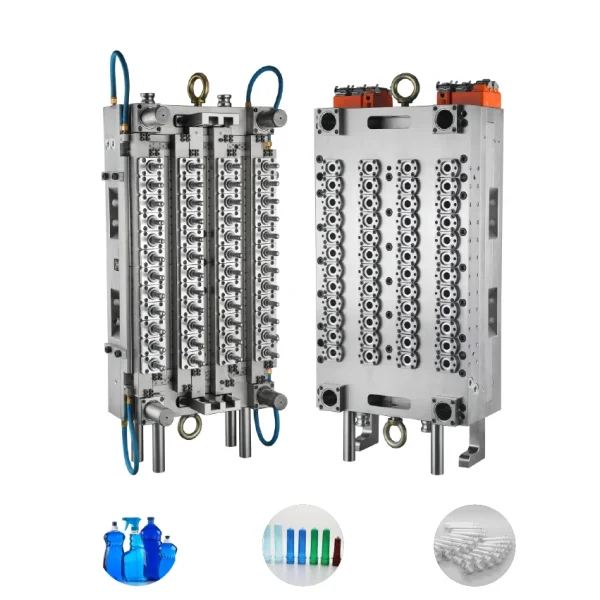
- Single cavity molds: one preform per cycle. Easy to build, easy to repair.
- Double cavity injection molds: 2 preforms produced in a cycle. Often the first step up from single cavity tooling.
- Multi cavity mold: can be run from 4 to 96+ cavities. Used high volume bottling lines
Single Cavity Molds vs Multi Cavity Molds: The Basic Tradeoff
Single cavity mold is easy to design and easy to repair. Only one cavity to check. A multi-cavity mold produces far more preforms per cycle. But every new cavity adds another thing which has to be kept in sync with the rest. The output is growing fast. It does not increase the margin of error.
Can a Cavities PET Preform Mold Keep Wall Consistency?
Yes a PET preform mold with many cavities can keep the wall consistent. But you have to synchronize three things: accurate machining, balanced melt pressure and the right machine. And if even one of these is out, you’ll see cavity-to-cavity differences in the finished preforms.
- Precision: Why Cavity-to-Cavity Machining Tolerance Matters
For a multi-cavity mold, every cavity has to be cut to almost the same size. Even a small gap between two cavities changes how much plastic each cavity holds. The primary cause of the uneven preforms in cavity molding is the size difference of the cavities. If one cavity differs by only a few microns, and this difference is repeated over 48 or 96 cavities, it can result in a measurable difference in wall thickness and weight.
- Pressure: The Core Challenge of Filling Many Cavities Evenly
Injection molding with balanced cavities requires the hot plastic to flow into all the cavities at the same pressure and velocity. Cavities further from the injection point may not fill as well as those closer unless the flow paths are designed to compensate for the distance. This is the most difficult part of making high cavity tooling. And it only gets tougher as the cavity count increases.
- Uniformity: What Happens When Balance Fails
Poor cavity balance is indicated by uneven wall thickness, warping, or differences in weight between preforms from the same shot. This can affect how the finished bottle expands during the blow-molding step in bottling. Thin spots stretch differently than thick spots. This trouble seldom stays hidden long on a busy line.
How Cavity Balance Is Engineered Into the Mold
Here are a few key design steps toolmakers use to keep high-cavity molds level:
- Runner design for a runner system with equal flow length path to each cavity
- Balanced gate sizing so that melt enters each cavity at the same speed
- Symmetrical cavity layout which avoids weak spots in pressure across the mold
The Role of the Mold Core Cavity in Consistency
The mold core cavity is the inner shape defining the inner wall of the preform. It must be equidistant from the outer cavity wall at all points in the mold. This gap will determine the wall thickness. If the core is slightly off center in one cavity, then one of those preforms will have a thin spot on one side, no matter how well the rest of the mold works.
Injection Molding Machine Needs for High-Cavity Molds
A good mold alone is not enough. It has to match what the mold needs for the injection molding machine running it.
- Properly sized clamping force for the total number of cavities and part size
- Steady shot-to-shot pressure and speed, cycle after cycle
- Sufficient melt output to fill all cavities within the desired cycle time
You will be making uneven parts even if you have a well balanced mold and a machine that is too small or not precise enough. The mold and machine have to be checked together, not as two separate things.
Double Cavity Injection Molds: A Middle Ground
Double cavity injection molds are a compromise between simple single cavity tooling and full multi cavity output. It is easier to balance than a high cavity mold, because there is only one other cavity to balance with. They also double the output per cycle. Tooling costs are also less than jumping straight to a multi-cavity mold. This makes double-cavity tooling a good choice for mid-volume producers not quite ready for full-scale tooling.
Comparing Cavity Configurations for Wall Consistency
More cavities are not always better! It is a trade-off between output per cycle and risk of uneven cavities.
Cavity Configuration Comparison Table
| Configuration | Wall Consistency Risk | Output Per Cycle | Relative Tooling Cost | Typical Use Case |
| Single cavity mold | Lowest | 1 preform | Lowest | Prototyping, small runs |
| Double cavity mold | Low to moderate | 2 preforms | Moderate | Mid-volume production |
| Multi cavity mold (8–32) | Moderate | 8–32 preforms | High | Standard bottling lines |
| Multi cavity mold (48–96+) | Highest, needs strict balance work | 48–96+ preforms | Very high | High-volume beverage and packaging lines |
More cavities means more work on balance to achieve the same level of consistency as a single cavity mold with far less work.
What Affects Cavities PET Preform Mold Price?
Cavities PET preform mold price is determined mostly by cavity count, steel quality, and how tight the tolerances are. It’s not a single price.
- More cavities mean more design work on the runners and gates and therefore balance work.
- Steel quality and mold life: higher quality steel costs more initially, but maintains its shape over more cycles.
- Precision level to be achieved: clear or light-weight preforms require a more precise machining, so the cost increases.
How Cavity Wear Affects Long-Term Wall Consistency
A cavity mold that is well balanced initially will not always remain so. Steel wears out after thousands of shots. This wear is not uniform across all cavities. Cavities around heavier flow paths erode faster than cavities in lighter flow spots. Regular size checks detect this wear early before it produces bad preforms on the line.
How to Evaluate a High-Cavity Mold Before Ordering
Before ordering tooling, take a look at this short checklist:
- Request sample shots from more than one cavity, not just a single one, to verify actual consistency
- Request cavity balance test data in writing- not just a verbal promise
- Ensure the machine can satisfy all clamping and injection requirements of the mold.
- Weigh the added cost & risk of a higher cavity count against added output
Frequently Asked Question
Do more cavities correlate to a lower wall consistency?
More cavities doesn’t necessarily mean less wall consistency. “They just need more engineering work to get to that standard.” A good 64 cavity mold can outperform a bad 8 cavity mold.
- Raw cavity count less important than balance of work.
- Increase of cavity count requires increase of machining precision
What is the difference between single, double and multi cavity molds?
A cavities PET preform mold can be made with one cavity, two cavities or many cavities. The big difference is the number of preforms per shot. One preform per cycle is produced by one cavity mold. A double-cavity mold produces two. A multi-cavity mold produces 4 to 96 or more.
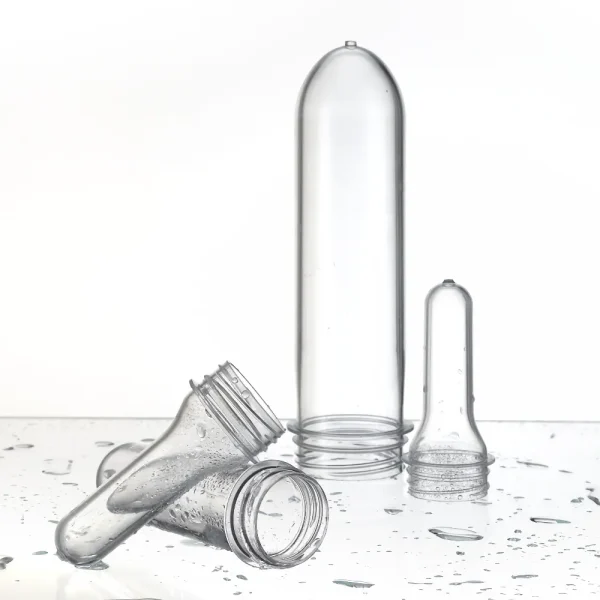
- single cavity – simplest, lowest output
- Multi-cavity: most output, most difficult to balance
How do you get cavity balance in high cavity molds?
Runner design, gate sizing, and a layout that treats each cavity the same way balances the cavity. All three parts work together, so that no cavity fills faster or slower than the others.
- Runner length is matched in each flow path
- The gates are sized so that the melt enters everyplace at the same speed
What are the machine specs to run a high cavity mold?
If you are running a high-cavity mold, you need an injection molding machine that has enough clamping force to match the number of cavities, shot-to-shot pressure consistency and enough melt output to fill each cavity in time. Even with a well built mold , if the machine is too small , you will get uneven parts.
- Clamping force must equal total cavity area
- Melt output must match cavity count
How much more expensive are high cavity PET preform molds normally?
Molds with many cavities are more expensive than those with one or two cavities because of the additional machining and balancing required. Prices are supplier and spec dependent, exact prices vary. The three biggest cost drivers are cavity count, steel grade and tolerance level.
- Cost increases with cavity number, but not linearly
- Cost No matter how many cavities Tighter tolerances
How often should the cavity dimensions be checked?
Cavity size should be checked on a schedule that is dependent on the amount the mold runs. Wear is a gradual thing, not an instant thing. High shot count producers should check sooner than those running lower volumes.
- Size checks catch wear before it appears in bad parts
- Wear is seldom uniform in all the cavities of the mold
Conclusion
A cavities PET preform mold can keep tight wall consistency even at high volume. But this only works if you get the right combination of precise machining, pressure balance and the right machine. The number of cavities alone does not determine the outcome. Balance engineering does this.
If you are seeking single, double or multi-cavity tooling, Huadian Mold Co., Ltd is worth a look. At the heart of their work is cavity balance and test results for multi-cavity PET preform tooling, which is the detail that matters most as cavity counts begin to increase.