


Which is the best method for molding pet plastic, injection, blow moulding or stretch blow moulding? Makers ask this before each job. The wrong choice can result in higher costs and scrap parts on the line.
This guide teaches you how to mould PET plastic. It looks at all three methods and shows where each one is best suited. You’ll also find a table, a list of key factors, and answers to common questions.
What Is PET Plastic Molding?
Molding PET plastic is the process manufacturers use to turn PET resin into bottles and other parts. They use heat and pressure to do it. PET is a clear, lightweight plastic. It is strong, and resists moisture and gas well. First, manufacturers melt small PET pellets. Then they mould the soft plastic in a metal mould. The method they opt for depends on the shape of the part, the wall thickness and the number of parts they require.
Key Facts About PET Plastic
| Property | Typical Value |
| Melting point | 250°C to 260°C (482°F to 500°F) |
| Glass point (softens) | 70°C to 80°C (158°F to 176°F) |
| Recycling code | #1 (PET or PETE) |
| Common products | Drink bottles, food jars, cosmetic containers |
How Is PET Plastic Injection Molded?
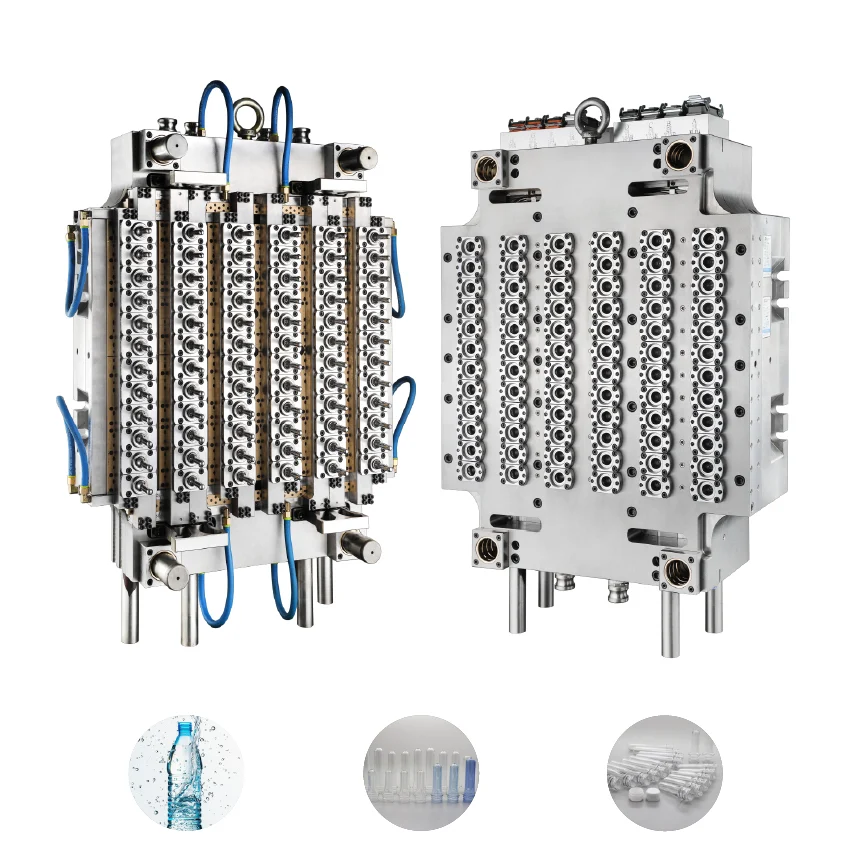
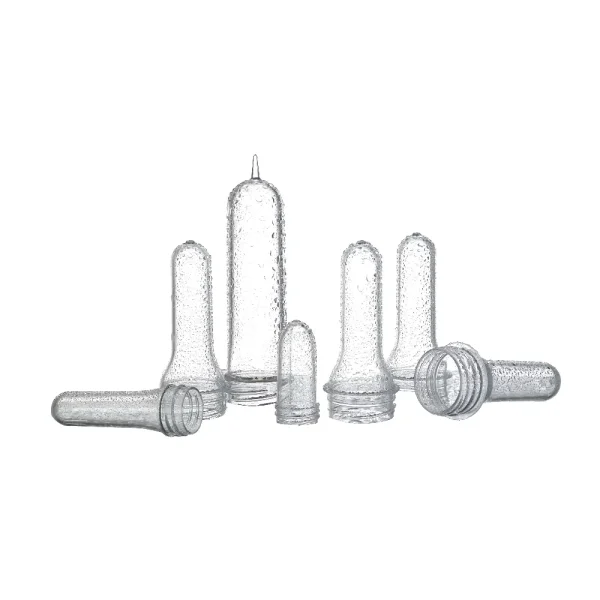
PET plastic injection moulding involves forcing hot, molten resin into a closed steel mould. This method is largely used to make preforms. A preform is a small, test-tube-shaped part. It is then reheated and blown into a full-size bottle. With injection moulding, you can control the wall thickness and the neck of the part very tightly. This is important for a tight seal on lids. It is also used by makers for thicker parts that don’t need to stretch, such as trays or hard caps.
Steps In PET Injection Molding
- Drying the resin: Because PET absorbs water from the air, the pellets dry first. This avoids air bubbles and weak spots.
- Melting and injection: The dry resin is heated and forced into the mould under high pressure.
- Cooling: The mould cools the part quickly so that it retains its shape and remains clear.
- Ejection: The part is taken out of the mould. Then goes on to blow moulding or packing.
What Is The Difference Between Blow Molding And Stretch Blow Molding?
Blow molding pet plastic and stretch blow moulding both convert hot PET into a hollow form. But they behave differently. A soft tube of PET and air is forced into a mould by extrusion blow moulding. This works fine for simple shapes. Stretch blow moulding is taking a preform and reheating it, stretching it with a rod and blowing it out with air. This is the best option to mould PET plastic bottle shapes like water and soda bottles. Stretching clarifies and strengthens the walls.
Comparing PET Molding Methods
| Method | How It Works | Best For | Common Products |
| Injection Molding | Resin pushed into a closed mold | Preforms, caps, hard parts | Preforms, caps, trays |
| Extrusion Blow Molding | Soft tube blown up inside a mold | Simple hollow shapes | Jugs, bottles with handles |
| Stretch Blow Molding (2-step) | Preform reheated, stretched, then blown | Clear drink bottles | Water bottles, soda bottles |
| Injection Stretch Blow Molding (1-step) | Preform made and blown on one machine | Small runs, special shapes | Cosmetic jars, small bottles |
Injection mould for preforms and hard parts. Stretch blow moulding for clear strong bottles.
What Factors Help Pick The Best Method For Molding PET Plastic Products?
It depends on the shape of the part, how clear it needs to be, how many parts you need. It’s not about finding one ‘best’ way of doing everything. The stretch step is necessary for a thin clear drink bottle. A thick tray or cap need not stretch at all.
Factors That Affect Mold Choice
- Wall thickness and clarity:- Thin walls and clear walls generally require stretch blow moulding.
- How many parts you need:- Large bottles often use 2-step stretch blow moulding. One-step machines can be appropriate for short runs.
- Part shape:- Extrusion blow moulding is often used to make handles or other odd shaped bottles.
- Tooling cost:- Injection moulds are more costly initially but hold tight sizes over long runs.
- Recycling:- PET has a recycling symbol of #1 . Moulds should not contain mixed materials that complicate recycling.
Major Mistakes When Molding PET Plastic
A common mistake is to overlook the need to dry the PET plastic prior to injection moulding it. Wet resin will cause bubbles, streaks and weak points. Another mistake is to do a big bottle run with a one-step machine. This reduces output compared to a two step line. Some molding pet plastic makers even ignore wall thickness. This creates weak points for when you stretch the part later. Working with a skilled mould maker early on helps catch these problems before the mould is even built.
Frequently Asked Questions
Can you injection mould PET plastic?
Yes, PET plastic can be injection moulded. That’s how makers create preforms and hard PET parts. The resin is dried and melted and is forced into a steel mould. It is before the blowing step that is used for bottles.
- Injection moulded PET parts cover preforms, caps and trays.
- The process is sensitive to temperature & must be controlled to prevent moisture issues.
- The plastic is not stretched in injection moulding, so it is not used for full bottle shapes .
How is PET plastic molded into bottles?
The PET plastic is turned into bottles in two steps. First, you injection mould a preform. Then it is reheated and stretch blow-molded to the final bottle shape. The preform is heated until it is soft, and then it is stretched on a rod and blown with air to fill the mould. This gives a clear appearance to the bottle and strong walls.
- Two-step stretch blow moulding is suitable for large runs.
- For smaller runs, one-step machines do both steps on a single machine.
- The stretch step is what makes PET bottles strong but light weight.
What temperature do you mould PET plastic?
PET plastic is commonly melted for injection moulding at 270°C – 290°C (518°F – 554°F). The preform is heated to a temperature of about 95°C to 105°C (203°F to 221°F) in the reheat step before stretch blow moulding. It is hot enough to soften it, but not to melt it. The settings will differ depending on the resin and the machine.
- It dries at about 150 to 170 °C and then begins to mould.
- Excess heat during reheat can cause uneven wall thickness.
- The part is more transparent if it is cooled quickly after moulding.
How do you make PET plastic without warping or hazing?
By drying the resin thoroughly and cooling the part evenly, you can molding PET plastic without warpage or haze. Uneven cooling is the number one cause of warping. Trapped moisture is the principal cause of haze and bubbles. Even heating on the mould also helps keep the walls even.
- Dry the resin to the level recommended by the supplier before moulding.
- Use uniform cooling channels in the mould.
- Step 4: Let it cool. Note: Faster doesn’t always mean clearer so don’t rush this step
What is the difference between PET and HDPE in moulding?
PET and HDPE differ mostly in clarity, gas barrier properties and moulding processes. PET is clear and blocks gas well, so it is the top choice for soda bottles. HDPE is not clear and is mostly blow extruded such as milk jugs. In addition, PET needs to be dried, unlike HDPE.
- PET: transparent, strong gas barrier, needs drying before use.
- HDPE: opaque, better chemical resistance, no drying needed.
- Both are recyclable, but they have different codes (PET is #1 and HDPE is #2).
What is the cycle time of a PET stretch blow moulding machine?
A PET stretch blow moulding cycle generally lasts 3 to 15 seconds per bottle. The exact time will depend on the bottle size, wall thickness and the type of machine. Bottles with thicker walls and larger sizes take longer to cool in that range. Fast rotary machines can mould many bottles at a time, increasing production.
- Bottles under 500ml tend to moulder towards the fast end of that range.
- With bigger bottles, it’s a few extra seconds to cool down.
- The cost of each bottle is directly tied to the cycle time.
Conclusion
Injection, blow and stretch blow moulding all are options and it’s a matter of what the part needs to do.” Is it supposed to be pressurised? To stay clear? To just not get crushed? Injection moulding is good with preforms and hard parts. The best option for clear, strong bottles is still stretch blow moulding. Getting the mould design right from the start saves time and cost later on.
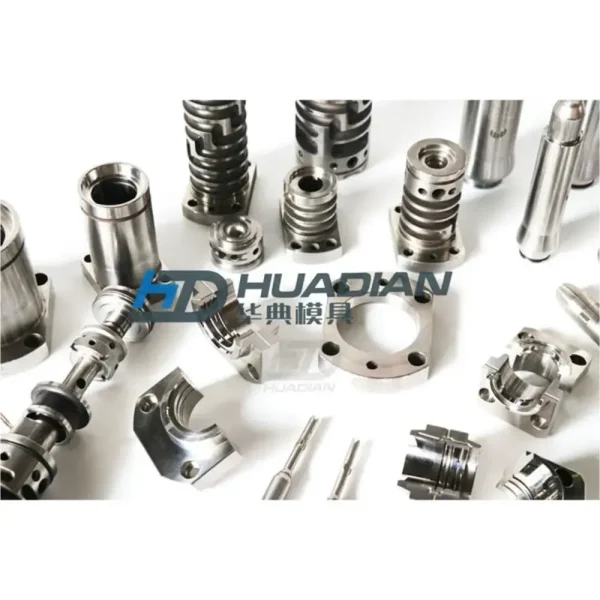
Huadian Mould Co., Ltd. is worth a look for molding pet plastic makers who need tooling for any of these methods. The company makes moulds for injection, blow and stretch blow processes for PET packaging. This range is important when a product line needs a preform mould and a bottle mould that work well together, not two different suppliers that do not communicate with each other.