


Why are some plastic bottles clear like glass and some cloudy and dull? I have been in the water bottle-mould and water bottle moulding machine business for 8 years. I have seen this problem many times. Clear finish comes from the best production. It’s the result of right action.
In this article we will explain polishing of cavities, melt balance and transparency. There will be case studies, FAQs, and the perfect mould partner.
What Is a Water Bottle Mould: Is Clarity Essential?
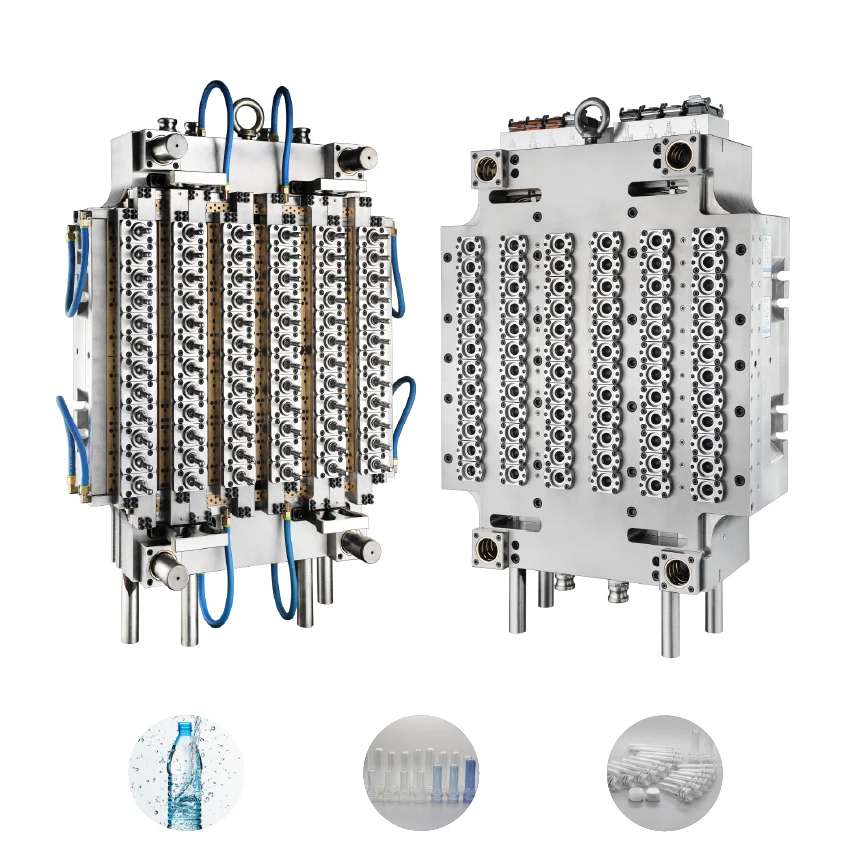
Water bottle moulds are made from steel. Moulds heated the plastic into bottles. The mould consists of the hollow and the core. Hot plastic fills the gap and it is cooled into the mould. A bottle’s surface determines how it looks. Rough-surfaced bottles are dull. Slick surfaces are easy to see-through. PET is good for clear bottles. It’s clear when used properly. Steel grade, gate type, cooling results. In a plastic bottle mould everything matters.
Water Bottle Mould Surface and Clarity: Key Data
| Parameter | Standard Grade | High Clarity Grade | Mirror Grade | Effect on Clarity |
| Surface Roughness (Ra) | 0.8–1.6 µm | 0.2–0.4 µm | 0.01–0.05 µm | Smoother & clearer |
| Steel Type | P20 | H13 | S136 Stainless | Better steel & better polish |
| Polish Method | Machine only | Hand + machine | Diamond paste | Diamond & mirror finish |
| Cooling Tolerance | ±0.5 mm | ±0.2 mm | ±0.05 mm | Tight & even clarity |
Does Your Cavity Surface Decide the Bottle’s Final Look?
The most critical part of the water bottle mould design is the surface of the cavity. Plastic inflow presses against walls. The ruffled walls trap air bubbles. Bubbles block the light. bottle with clouds. Plastic flows without airlock on smooth surfaces. The bottle is transparent. Good plastic bottle mould cavities are normally polished 5-7 times. Each level removes scratches from the one before. Finally a diamond paste of 0.5 µm is used. This gives a mirror-like finish at Ra 0.05 µm.
The 5-Stage Polishing Process: Simple and Clear
- Stage 1 tool marks are removed with coarse stones.
- Stage 2 deep scratch with fine stone.
- Stage 3 is the sandpaper between 400 to 2000 grit.
- Stage 4 uses diamond film
- Stage 5 uses soft cloth and ultra-fine diamond paste.
Polishing Stages: Tools, Grit, and Results
| Stage | Tool | Grit / Grade | Result | Time |
| 1 – Rough | Grinding stone | 80–120 grit | Removes tool marks | 2–4 hrs |
| 2 – Medium | Fine stone | 220–400 grit | Less scratches | 3–5 hrs |
| 3 – Fine | Sandpaper | 600–2000 grit | Smooth surface | 4–6 hrs |
| 4 – Ultra-fine | Diamond film | 3–6 µm | Near-mirror | 5–8 hrs |
| 5 – Mirror | Diamond paste | 0.5 µm | Full clarity | 3–4 hrs |
Key Benefits of Mirror-Polished Cavities
- Glass like glass Bottles clear
- Removes haze, flow lines and scratches
- Premium look builds confidence in the buyer.
- Longer mould life and less wear
Cavity Finish vs. Bottle Clarity
| Finish Type | Bottle Look | Haze Level | Best For | Cost |
| Machine finish | Dull | 15–30% | Industrial use | Low |
| Hand-polished | Semi-clear | 5–15% | Basic bottles | Medium |
| Diamond mirror | Crystal clear | Under 2% | Premium bottles | High |
The polishing of diamond is most clear. Premium drinking bottles are well worth the extra expense. “Basic finishes work only on non-clear containers.”
Does Unbalanced Plastic Flow Cause Hazy Spots in Bottles?
Melt balance is the simultaneous reaching of hot plastic to all mould sections. This is required for a water bottle blow moulding machine. Uneven flow cools one side faster. That stresses the plastic. Stress blocks light. There are white or cloudy dots on the bottle. Gate and runner design is the beginning of good melt balancing. The most equal flow is obtained with center gate or hot runner systems. In multi-cavity water bottle moulds, the runner lengths have to be balanced to ensure even filling of all cavities.
Runner and Gate Design: Why Balance Is Everything
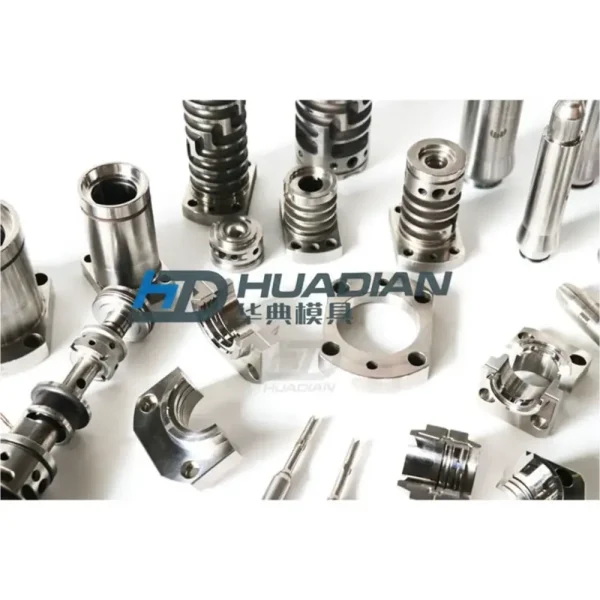
A difference of 2 mm in runner length delays cavity filling by 0.3 s. The finished bottle has a haze from that little gap. Hot runners keep the plastic molten to the gate. This reduces the pressure loss and guarantees an even fill. Valve gates close cleanly without marking the bottle.
Cold Runner vs. Hot Runner: Which Is Better for Clarity?
| Feature | Cold Runner | Hot Runner | Clarity Impact |
| Waste | High | None | Hot runner saves material |
| Heat control | Limited | Zone-by-zone | Hot runner & even heat |
| Pressure loss | Higher | Lower | Less pressure & less haze |
| Final clarity | Good | Excellent | Hot runner wins |
Advantages of Good Melt Balance
- Stops uneven cooling mist
- Provides uniform thickness to the bottle wall
- Cuts waste on manufacturing line
- Increases output water bottle moulding machine
Melt Balance by Industry Sector
| Sector | Bottle Type | Balance Priority | Clarity Need |
| Beverage | 500ml–2L PET | Very high | Optical clear |
| Pharma | Medical bottles | Critical | Zero haze |
| Sports nutrition | Wide-mouth | High | Clear preferred |
| Household | Opaque HDPE | Low | Not needed |
Hot runners work well with clear bottles. Beverage and pharmaceutical companies have the most stringent melt balance requirements. The most common cause of hazy patches in clear bottles is uneven flow.
What Steps Do Factories Follow to Keep Every Bottle Clear?
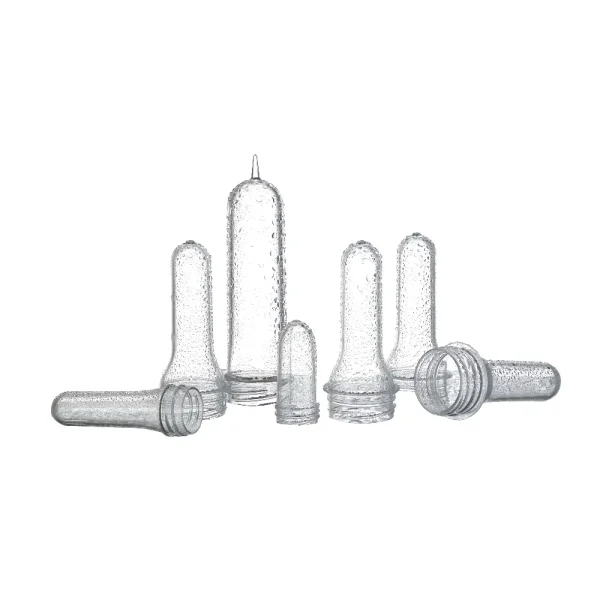
It’s hard to run clear bottles in volume. The fully automatic water bottle moulding machine produces 80,000 bottles in a shift. Must be tightly controlled to keep clear. Key variables mould temperature Resin quality Machine settings Cooling time PET bottles should be moulded between 8 and 15 °C. Cooler moulds cool faster and reduce haze. Full automatic water bottle moulding machine: Monitoring of pressure and speed. Engineers check resin cure and room humidity every shift.
Case Studies: Real Clarity Challenges and Solutions
| Case | Factory | Problem | Fix Used | Result |
| 1 | Beverage plant | Hazy 1L bottle | Hot runner + mirror polish | Haze cut from 12% to 1.5% |
| 2 | Sports OEM | Orange peel on body | Added diamond polish stage | Ra dropped to 0.03 µm |
| 3 | Pharma supplier | Uneven clarity, 16 cavities | Re-balanced all runner lengths | Uniform clarity in all cavities |
| 4 | Water brand | Clarity loss at 50,000 shots | Re-polished + new gate insert | Clarity back to Day 1 level |
Machine Settings That Protect Bottle Clarity
- Continue mould cooling for PET resin, 8-15°C.
- Inject at 60-90 mm/sec for clean fill.
- Keep back pressure < 8 bar, resin protection.
- Before use, the dew point moisture in the PET resin shall be lower than 0.005%.
Fully Automatic Systems: Pros and Cons
| Factor | Pros | Cons |
| Speed | 80,000+ bottles/shift | High startup cost |
| Consistency | Real-time sensor control | Needs trained staff |
| Clarity check | Auto-rejects bad bottles | Camera setup is complex |
| Energy | Servo motors save 30% | Higher upkeep cost |
At high volume, cleanest results were obtained with automatic methods. Research shows that most haze issues can be solved with mirror polish, hot runners and balanced runners. “Waste reduction and product quality are worth the effort fast.
Frequently Asked Questions
How many polishing processes are required for clear bottle moulds?
Minimum 5 phases. Premium 7-stage moulds The final step consists of using 0.5 µm diamond paste.
Stage skipping gives an orange-peel texture.
Last stages remove markings.
The last steps have to be done manually.
Do water bottle cap moulds need the same level of clarity?
Not necessarily. Most of the water bottle cap mould designs are using PP resin. Priority is not clarity.
Cap moulds objectives are fit and seal.
Clarity caps need to be carefully polished.
Gate position changes cap.
What is the difference between blow and injection blow moulding?
The preform is stretched into the final shape of the bottle by using air pressure on a water bottle blow moulding machine. Thinner walls and more clarity than solid injection moulding.
Stretch blow moulding is most advantageous for PET bottles.
Preforms start via injection moulding.
Blow moulding heat control clarity stretch ratio
When can a polished cavity be repolished?
S136 cavities last 300,000-500,000 shots between re-polishing. The type of resin affects wear speed.
Coarse resins wear the surface faster.
Clean polish from time to time to give it a longer life.
Re-polishing is less expensive than cavity replacement.
Can an autonomous moulding machine be clear without supervision?
Yes. Cameras and sensors control fully automatic water bottle moulding machines. Identifies bad bottles and changes settings.
Cameras check every bottle that comes out.
Sensors measure heat and pressure in real-time
Fully automated reject rate <0.5%.
Conclusion
Clear bottles require many fine steps; They need good steel, polishing, plastic flow and machine settings. These stages must work together. Ragged cavities or damp resin in a bottle can be a source of damage. Properly prepared, your bottle will be clean, safe and of high quality.
Select Huadian Mould Co., Ltd. for the very best plastic bottle mould, mould design, and water bottle mould projects. Mirror-polished cavities and hot-runner systems, sophisticated mould designs ensure clarity. Their company also handles water bottle cap mould tools and complete lines with automatic bottle moulding machine setups. Huadian can always deliver clear, quality bottles for small or large orders.