


Why do some PET preforms crack, bend or have cloudy spots on them as they are ejected from the mould? When a shipment fails a quality check, buyers who order preform injection molding often ask this question.
This guide covers the most common defects buyers see: warping, stress marks and bubbles. It explains why each problem occurs. It also shows simple ways to spot problems early, before a full production run begins.
Highlights
- Warping: If the mould is too hot or cools unevenly, the neck and walls of the preform will bend.
- Stress marks: If the injection speed is too fast or too slow, you will see lines.
- Bubbles and voids: Cloudy areas are caused by gas from trapped moisture or air.
- Quality checks: Ask suppliers for inspection reports before mass production.
- Machine choice: A good preform injection molding machine lowers defect rates.
What Is Preform Injection Molding?
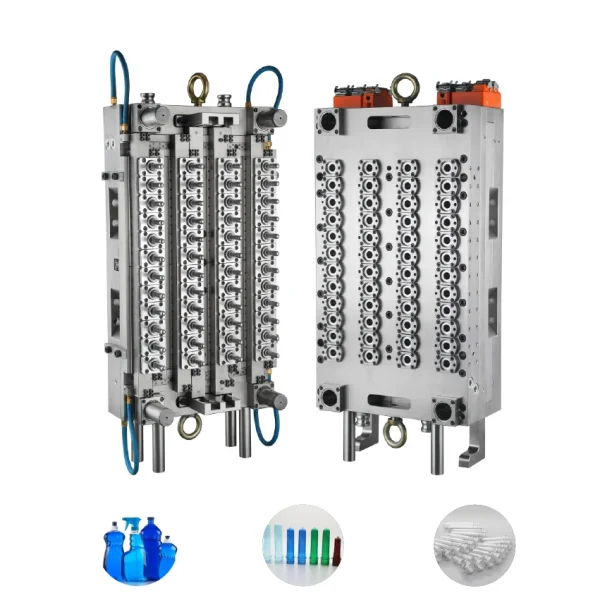
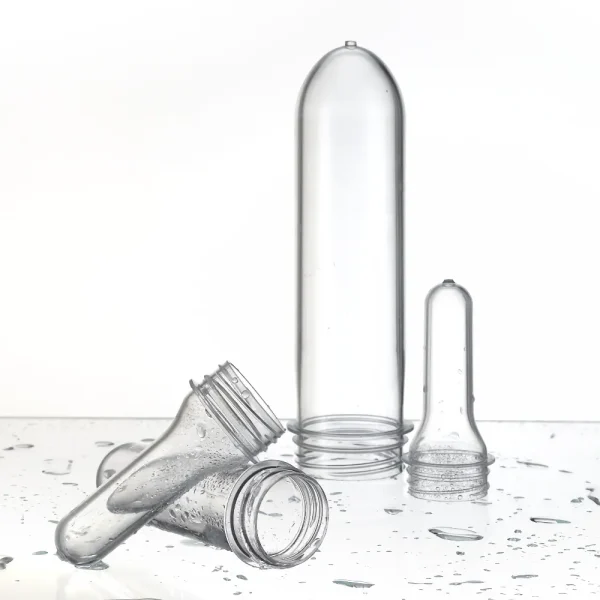
Preform injection molding is a process that takes melted PET plastic and molds it into a small part called a preform. PET stands for polyethylene terephthalate, a common plastic used to make bottles. This section resembles a little test tube. A machine heats plastic balls. Then it presses the melted Plastic into a steel mould. Mould cools the Plastic to a solid shape.
Later, the workers reheat the preform and blow it to the shape of a complete bottle. This is different from blow moulding where a preform that is already made is stretched into its final shape. Preform quality determines the appearance and performance of the final bottle.
Quick Facts About This Process
| Aspect | Detail |
| Material | PET resin, dried before use |
| Machine type | Injection molding machine for pet preform |
| Cycle time | Usually 15 to 30 seconds per shot |
| Common defects | Warping, stress marks, bubbles, short shots |
| End use | Water bottles, beverage bottles, jars |
What Causes Warping During Preform Molding?
Warping happens when different parts of a preform cool at different rates. One side of the wall shrinks more quickly than the other side. This causes the preform to warp or twist out of shape. One of the most common problems buyers see in pet preform injection molding. Usually the main reason is small temperature differences inside the mould.
Common Causes of Warping
- Unequal mould temperature in the cavity
- Cooling time for wall thickness too short
- Preform with non-uniform wall thickness
- Insufficiently dried resin before moulding
- Preforms removed from the mould prior to being fully set
How Do Stress Marks Affect Preform Quality?
Stress marks are narrow lines or faint streaks in the preform wall. They are formed during moulding. They occur when Plastic flows too fast or with too much pressure into the mould. Stress marks weaken the preform. They can cause cracks later, when the preform is reheated and blown into a bottle. Buyers should not dismiss visible stress marks as an ugly cosmetic problem but rather as a warning sign.
Stress Mark Causes and Fixes
| Cause | What It Looks Like | Main Reason | Simple Fix |
| Injection speed too fast | Streaky lines near the gate | Plastic flows in too quickly | Lower the injection speed setting |
| Injection pressure too high | Flash or stress rings | Too much force pushes plastic into the cavity | Reduce holding pressure |
| Mold gate too small | Stress marks near the neck | Plastic squeezes through a narrow opening | Widen or reshape the gate |
| Resin too cold | Cloudy or brittle spots | Plastic does not flow smoothly | Raise barrel temperature slightly |
Why Do Bubbles and Voids Form in PET Preforms?
Bubbles and voids can be formed by the conversion of trapped air or moisture in the PET preform to gas. This occurs within the hot Plastic. As the Plastic cools the gas is trapped. It leaves little holes or cloudy spots in the wall. This fault is often caused by resin that has not been dried sufficiently before moulding.
Why Resin Drying Matters
PET resin can absorb moisture from the air over time. If the resin is not dried long enough, the moisture turns into steam inside the barrel of the machine. Most PET resins need to be dried for a few hours at a specified temperature before they go in the machine. Another common source of bubbles is skipping or shorting this step. This is a problem that usually arises during the order of bottle preform injection molding.
How Can Buyers Inspect Preforms Before Shipment?
For the buyer, a simple check-up will catch most defects. This check should be a feel and a check an injection moulded preform before a shipment leaves the factory. A few more minutes of checking can save a much bigger issue down the road.
Simple Preform Inspection Steps
- Hold the preforms up to a light and look for cloudy areas or bubbles
- Check the neck and body for any bends or twists
- Measure wall thickness at several points with callipers
- Lightly squeeze to check for weak or brittle areas
- Request the supplier to provide defect rate report of same batch
How to Choose a Reliable Preform Injection Mold Supplier?
A good tooling supplier anticipates problems before they happen. That’s because the mould makes and cools all parts. Good cooling channel design and well made steel cavities minimise warping, stress marks and bubbles.
Buyers should enquire about mould cavity count, steel hardness and cooling channel layout before placing an order. A good mould costs more, first of all. But it reduces reject rates and saves money over the entire production run.
Frequently Asked Questions
What are cloudy spots in PET preforms?
Cloudy spots in PET preforms is due to moisture or air trapped in the preform turning to gas during moulding. The gas makes little bubbles in the plastic wall.
- Most common reason is poor resin drying
- Also can be caused by an incorrect barrel temperature.
- The easiest way to view the defect is to hold a preform to the light
How long does a cycle take for moulding PET preforms?
For moulding a PET preform the normal cycle is in the range of 15 to 30 seconds. It depends on preform size and wall thickness. The longer it takes to cool, the bigger the preform.
- Thicker walls add a couple of seconds to the cycle
- Faster cycles need more powerful cooling systems
- Cycle time affects total production cost
What is best mould temperature for PET preforms?
The best temperature for PET preform moulds is generally cool, typically between 5°C and 15°C. This cools the Plastic quickly and keeps it clear. It is more about keeping the same temperature in all cavities than the actual number of cavities.
- Uneven temperature is one of the principal causes of warping
- Check mould cooling channels frequently
- Temperature should be taken for each batch
Can Warped Preforms be Recycled?
Warped preforms are usually not usable for the intended purpose. Bent shape runs straight through to the last bottle. Some manufacturers grind up the Plastic and reuse it as regrind, mixed with fresh resin.
- Bottle quality is usually kept high by using low regrind ratios
- Badly warped preforms are usually scrapped
- Cost-saving reuse of material requires care in mixing
What Is the Difference Between Preform Injection Molding and Blow Molding?
This makes the small beginning shape. Blow moulding then stretches that shape into a bottle. The two steps are generally performed on different machines, but some systems do both.
- Injection Moulding of Neck and Wall Thickness Control
- Blow moulding determines the final shape and size of the bottle
- Defects from the injection stage frequently carry over into the blow stage
What Influences Pet Preform Injection Molding Machine Price?
The price of this machine is determined by the clamping force , number of cavities and the degree of automation . Machines with more cavities cost more to start but produce preforms faster per cycle.
- The more cavities, the greater the price and output.
- Automation increases cost but decreases labour requirements
- Buyers should look at cost per preform, not just machine price.
Conclusion
Almost always, the source of warping, stress marks, and bubbles in preform injection molding defects is one of three things. They are mould design, cooling control, and resin drying. Knowing these reasons helps buyers spot problems early. They can also ask better questions in choosing a supplier.
Huadian Mould Co., Ltd. designs preform injection moulds with well designed cooling channel layouts and strong, well-made steel cavities. This helps to minimise these common defects from the start. Buyers who are looking for less scrap and more consistent preforms should consider working with an experienced mould maker like Huadian Mould.