


Can a little change in temperature or pressure destroy a whole lot of cosmetic preforms? I’ve been in the cosmetic molding industry for over 10 years and I can say it’s real. There are 3 main factors that define cosmetic preform mould performance. Temperature, pressure and fill rate.
If you are seeking ways to efficiently run a cosmetic preform mould, this article will be of help to you. This guide walks you through everything from process parameters to real world data.
What Is the Basic Cosmetic Preform Mould?
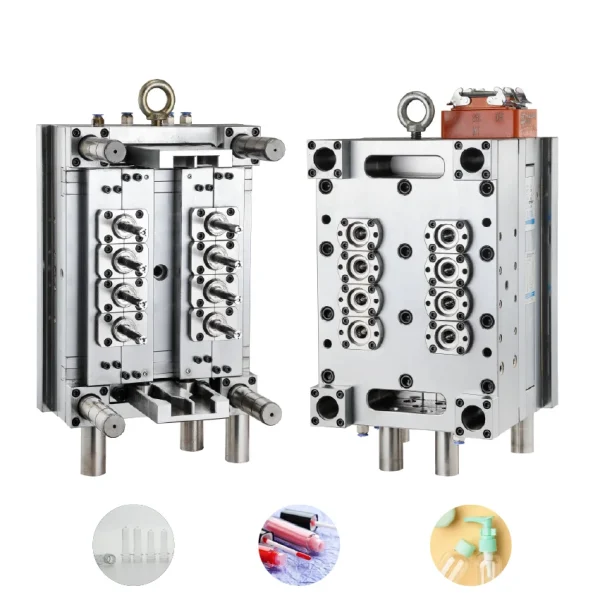
A cosmetic preform mould for preforms is an accurate tool to shape uncured plastic resin into a tubular shape. The reheated preform is then blown into the finished bottle by a cosmetic bottle blow molding machine. The mold itself is hardened steel with smooth holes. All cavities must meet tight dimensional specifications. The number of cavities is strongly correlated with the volume of the output.
Today, the typical number of mold cavities is 4 to 96. The mould design controls the thickness of the preform walls, the finish of the neck and the length of the body. Poor quality molds produce poor performance and flawed bottles. That is why the sooner you start looking for the best cosmetics molding business the better.
Key Technical Parameters Of Preform Mould Design Data
| Parameter | Standard Range | Effect On Output | Risk If Wrong |
| Cavity Count | 4 to 96 | Determines hourly output volume | Over/underproduction |
| Steel Grade | P20 / H13 / S136 | Affects durability and polish | Premature wear, surface defects |
| Wall Thickness | 1.5mm to 4.5mm | Controls preform weight and clarity | Shrinkage, sink marks |
| Neck Finish Tolerance | +/- 0.02mm | Ensures cap fit and seal | Leaking caps, rejections |
| Cooling Channel Layout | Spiral / Straight | Controls cycle time and warp | Long cycles, part warp |
How Does Mould Temperature Control Your Cosmetic Output?
What temperature is your cosmetic preform mould running at? Any process engineer worth his salt will ask this very first thing before starting a run. The temperature of the mould influences how fast the plastic cools and how easy the part is to remove. The wrong temperature setting would lead to longer cycles, deformed walls and foggy parts for a china plastic cosmetic mold. Most cosmetic preforms can tolerate mold temperatures of between 8 and 18 degrees Celsius.
The constant flow of cooling water through the channels is very important. The uneven cooling causes the preform to shrink faster on one side than the other. And so the necks get bent and the pieces get rejected. Any reputable manufacturer of cosmetics packaging molds will design cooling channels based on the component geometry.
How Barrel Temperature Zones Shape Plastic Flow Quality
The injection barrel contains several heating zones. Setup each zone properly. The chilliest is at the very end of the hopper, zone 1. Hottest part is zone 4, close to nozzle. The barrel temperature for PET cosmetic preform moulds is usually between 265 and 285 degrees Celsius. The melt is sheared because of an incorrect gradient. Flow lines are induced by shear stress and also increase the AA concentration in PET.
This serious quality issue is affecting the production of cosmetic bottles. Also, ensure that the hot runner and nozzle tip of your cosmetic mold are compatible with the melt index of the material. When the two don’t get along, the tip of the nozzle can drip, or even freeze up.
Mould Temperature: Water Chiller vs Ambient Cooling Methods
| Method | Temp Range | Best For | Cost Level |
| Water Chiller | 5°C to 15°C | High-speed multi-cavity moulds | Medium-High |
| Ambient Water | 18°C to 25°C | Low-cavity slow-cycle moulds | Low |
| Oil Temperature Control | 40°C to 80°C | Engineering resin moulds | High |
| Hot Runner Only | N/A – manifold heat | Hot runner gate control | High |
Importance of temperature control:
- Use a different cooler for each mold to avoid temperature contamination.
- Check the temperature differential between the water entering and leaving the system. Keep a delta T below 3°C.
- Insulate the mold platens to minimize heat to the machine frame.
- Run temperature recording on all shifts to catch drift early.
How Does Injection Pressure And Fill Rate Impact Part Quality?
Why would the same machine get different results between two different cosmetic preform moulds? The right injection pressure and fill rate will do the trick every time. This pressure pushes the melt into the cavity. The fill rate determines how quickly it gets there. Burning or jetting happens when you move too fast. If movement is too slow it will cause weld lines or short shots. The fill time for a cosmetic cap or preform mold is generally from one-half to two and one-half seconds. Then apply pack and hold pressure to compensate for shrinkage.
A manufacturer of blow molding machines for cosmetic bottles using downstream equipment requires regular preform weight and wall thickness. You get consistency by ensuring that your pressure and fill rate settings are consistent.
Injection Speed Profiles: How To Set Them For Cosmetic Preforms
There is no set rule for speed of injection. The profile changes when the cavity is filled. This slow movement in the first phase allows the gate to open smoothly. In the second phase the speed increases to fill the body quickly. Phase 3 reduces speed just before filling up to prevent flash.
For example a 20g PET cosmetic preform could have a three stage profile like this: 30% fill speed at start, 80% speed in the middle, 40% fill speed at the end. Any supplier of cosmetics plastic molds will tell you that this phased procedure can reduce defect rates by as much as 40% over single-speed filling.
Pressure Settings Across Process Phases: Data Reference
| Phase | Pressure Range (bar) | Duration | Key Risk If Wrong |
| Injection / Fill | 800 – 1400 bar | 0.5 – 2.5 sec | Short shot, jetting, flash |
| Pack / Hold | 400 – 700 bar | 1.0 – 4.0 sec | Sink marks, weight variation |
| Cooling | 0 bar (no injection) | 5 – 15 sec | Warp if cut short |
| Back Pressure | 50 – 150 bar | Screw recovery | Poor melt homogeneity |
Key points on pressure and fill control:
- The recommended starting point for hold pressure is 50-60% of the injection pressure.
- Use position-based transitions from fill to pack instead of time-based transitions.
- Check the size of the cushion for each shot. > 2mm cushion variation indicates an issue.
- Reduce back pressure to prevent the screw from overheating.
How Do You Optimise All Three Factors For Peak Efficiency?
How do pressure temperature and fillrate work together ? You can’t fine tune them independently, you have to tune them together. When you change one, it changes them all. For instance, a higher melt temperature results in lower fill pressure. To cool the mold faster at lower temperatures, you may need to increase the hold pressure. This is achieved by a methodology called DOE (Design of Experiments).
You can get process data from any reputable manufacturer of cosmetic packaging molds or blow molding machines for cosmetic bottles. True optimization is stable cycle time, low energy consumption, consistent component weight and minimum scrap. Practical examples to learn the essential tactics.
Frequently Asked Questions
How Hot Do I Mould PET Cosmetic Preforms?
Cosmetic preform moulds are mostly molded at a temperature between 8 and 15 degrees Celsius. This series offers great clarity and fast cooling.
- Use a separate chiller to keep this range in check.
- Check the delta T of input and outflow for flow limit.
- Temperatures over 18C lead to cycle lengthening and part haze.
What is the recommended injection pressure for a cosmetic cap mold?
Depending on the shape of the cap and the wall thickness, the injection pressure to fill a cosmetic cap mold can vary from 900 to 1300 bar.
- Thin-wall caps need a higher pressure for fill before freeze-off.
- Always turn on the hold pressure before the cavity capacity reaches 98%.
- If you see flash near the parting lines, it is a sign of too much pressure.
Why is there a variation in the weight of cosmetic preforms?
The main causes of weight change are instability of the fill phase, variable back pressure, and poor screw recovery.
- Make sure you have constant back pressure during the shift, between 80 and 120 bar.
- Position switch-over for fill-to-pack transition rather than based on time.
- If there is still a difference, look at the screw tip and check the ring for wear.
What Is The Effect Of Fill Rate On The Surface Finish Of Cosmetic Bottles?
The flow front speed is directly dependent on the fill rate. Jetting markings are caused by going too fast. This process is too slow, and cold slugs may form on the surface.
- Use multi-stage fill profiles to control the speed at the start and end of the fill.
- Pour the last 10% slowly to avoid glare and surface stress marks.
- For best results it is important to always match the fill rate to the gate diameter and part volume.
What is the expected lifespan of a cosmetic preform mold?
The lifespan of a cosmetic mold from a professional cosmetics molding manufacturer is from one million shots to five million shots, depending on the steel type and maintenance plan.
- Do preventative maintenance every two hundred thousand to five hundred thousand shots.
- Inspect cooling channels for any scale buildup at 100,000 cycles.
- When not in use, protect molds from rust by storing with an inhibitor.
Conclusion
The operation of a cosmetic preform mould is not a matter of guesswork. You need data and methodical testing to back up every decision you make about a process. This article gives you a good base to work from. But the best outcome is when you work with an experienced molding partner who knows your product and your goals.
That’s what Huadian Mould Co., Ltd. does. With in-depth process understanding and precise engineering, Huadian becomes a leading provider of cosmetics packaging molds and an authority in plastic cosmetic moulds in China. Whatever it is you need, be it Cosmetic Preform Mould components or a complete turnkey mould system, they are there to help.