


Ever wonder how some manufacturers of oil bottles are able to double their production in half the time? Over my more than 12 years of direct engagement in the PET packaging and mould manufacturing field I have seen the effect a well selected edible oil preform mould can have on a whole production line.
Read on to discover the benefits of edible preform mould technology, the relationship between cycle speed and scalability, the factors to consider when selecting a mould system for your plant and why Huadian Mould Co., Ltd. is the best choice for all your mould needs.
What Is an Edible Oil Preform Mould and Why Does It Matter?
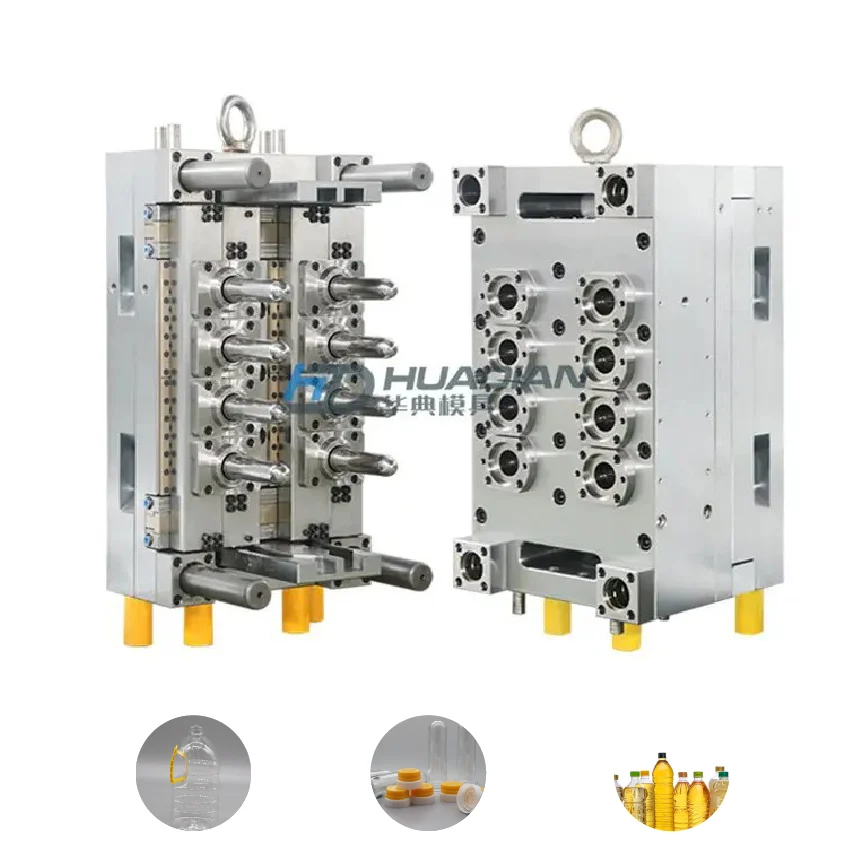
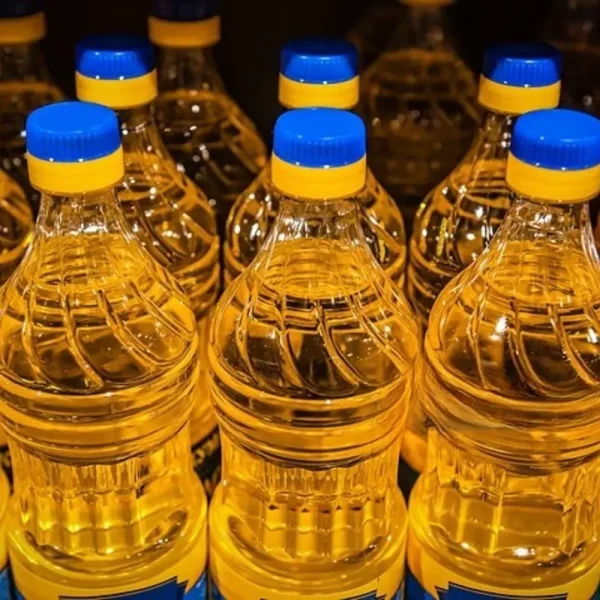
A precisely manufactured injection mold tool used to mold raw PET resin into an edible oil preform mold. And then the oil bottle turns into this little test tube. Any edible oil bottle blow moulding machine system should have these molds as its basis. The design of the mould determines the distribution of material, the wall thickness and the neck finish.
A good PET preform mold for edible oil should have uniform heat transfer and fast cooling. Shorter cycle times result from fast cooling. Shorter cycles offer more production per hour. A multi cavity edible oil preform mold can produce 4, 8, 16 or even 48 preforms each shot. Also the number of cavities in the mold is important.
PET Preform Mould: Technical Performance
| Mould Feature | Technical Detail | Impact on Output | Industry Standard |
| Cavity Count | 2 to 96 cavities | High – more cavities, more output | 8-48 cavities common |
| Cycle Time | 8-15 seconds per shot | Very High – faster cycle = more bottles/hr | < 12 sec preferred |
| Steel Grade | P20, H13, S136 | High – affects tool life and finish | H13 for high volume |
| Cooling System | Conformal or straight channels | Very High – controls cycle speed | Conformal preferred |
| Hot Runner System | Valve gate or open gate | High – reduces waste, better fill | Valve gate standard |
How Does Cavity Count Affect Scalability and Output Rate?
Can one mold really increase your factory’s output significantly? Yes, and it’s the number of cavities that matter. For small production runs or test runs a 2 cavity oil preform mould is ideal. But when demand increases, the fastest way to scale is to upgrade to a multi-cavity edible oil preform mold with 16, 24 or 32 cavities. So each cavity gives one preform per cycle. With a 10 second cycle time and a 24 cavity mold, 144 preforms can be produced in a minute.
Only 12 per minute are produced with a 2-cavity mold at the same speed. The difference in volume is enormous. Another scalability issue is the use of a modular, customized edible oil bottle preform mould, where you can replace cavity blocks without having to replace the entire mold base.
Cavity Count vs. Output: Scalability Breakdown Analysis
| Cavity Count | Preforms per Cycle | Preforms per Hour (10s cycle) | Best Use Case |
| 2 Cavity | 2 | 720 | Trials, small runs |
| 8 Cavity | 8 | 2,880 | SME bottling plants |
| 16 Cavity | 16 | 5,760 | Mid-scale production |
| 32 Cavity | 32 | 11,520 | Large volume output |
Wide Neck vs. Narrow Neck Preform Design: Side-by-Side
| Feature | Wide Neck Design | Narrow Neck Design | Recommended For |
| Neck Diameter | 38mm – 63mm | 18mm – 30mm | Wide: cooking oil; Narrow: water |
| Fill Speed | Faster pour rate | Controlled pour rate | Wide for oil viscosity |
| Cap Type | Flip-top or screw cap | Standard screw cap | Wide for oil use |
| Mould Cost | Slightly higher | Standard cost | Budget vs. function |
Key Advantages of High-Cavity Mould Systems
- Less machinery means less space and energy for maintenance and upkeep.
- Faster return on investment (ROI) – the cost of the mold is quickly recovered with high volume manufacturing.
- Modular frames enable rapid and easy product changes.
- Ideal for robotic handling – consistent shot volume is conducive to automation.
What Makes a High-Speed Edible Oil Preform Mould So Fast?
In the retail industry, the processing of brands such as 1L and 5L bottles of cooking oil needs to be quick. Large format lines are good for a 5L edible oil bottle preform mould with 8 to 16 cavities. A standard wide neck edible oil preform mould with twenty four or more cavities is used in commercial food service. Small specialty oil producers often use a 2 cavity oil preform mold for specialized SKUs. The right number of cavities is a direct correlation to the specific volume demand in the sector.
What Makes a High-Speed Edible Oil Preform Mould So Fast?
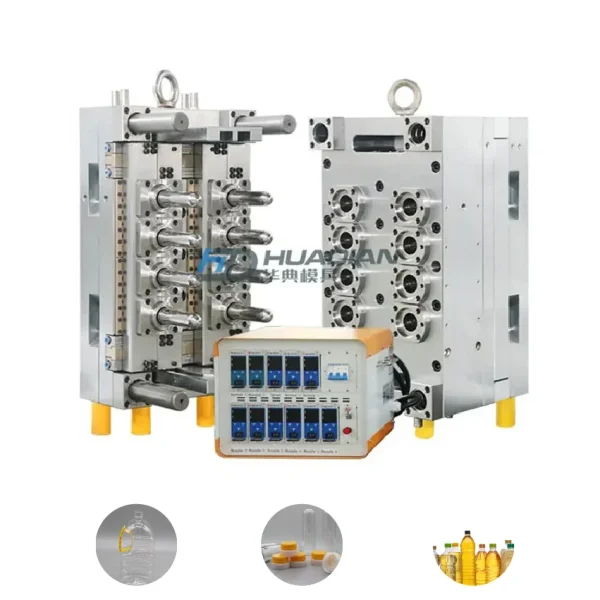
Can you generate the 9 second cycle that occurs inside a mould? If so, what is really going on there? There are three main engineering variables that influence the speed of a high speed edible oil preform mould, which are cooling design, hot runner technology and steel quality. The preform is cooled by the cooling system after the injection. If the cooling is speeded up, the part will solidify and be ejected sooner.
A hot runner edible preform mould maintains the plastic melt hot in the runner system but cool in the cavity to speed up cycle time and reduce cold runner waste. The mold will continue to be exact in its dimensions after millions of shots because high-grade steel, like H13 or S136, is wear resistant at high temperatures. The human delay is removed from an automatic oil bottle preform mould system by these features and robotic ejection.
Cooling System vs. Cycle Time: Technical Advantages
| Cooling Type | Avg. Cycle Time | Cooling Efficiency | Cost Level |
| Straight Channels | 12-15 seconds | Standard | Low |
| Baffle System | 10-12 seconds | Good | Medium |
| Conformal Cooling | 8-10 seconds | Excellent | High |
| Rapid Water Circuits | 7-9 seconds | Superior | Very High |
Hot Runner vs. Cold Runner Mould: Head-to-Head Comparison
| Comparison Point | Hot Runner Mould | Cold Runner Mould |
| Material Waste | Near zero – no sprues | Moderate – sprues need recycling |
| Cycle Speed | Faster – no runner cool time | Slower – runner must solidify |
| Startup Cost | Higher investment | Lower initial cost |
| Long-Term Savings | Significant savings over time | Ongoing material cost |
In terms of efficiency and return on investment (ROI), the hot runner edible oil preform mould is second to none. The obvious answer for mass producing oil bottles is a hot runner. Cold runner is a good choice for low volume or low budget applications. If you’re doing over a million parts a year, you need to be using a hot runner.
Speed-Boosting Features to Look for in a High-Speed Mould
- Hot runners, no drool or stringing with a valve gate, and accurate fill control.
- The beryllium copper inlays give you an edge in high wear areas when dealing with heat transfer
- Auto-lube systems reduce downtime associated with manual maintenance.
- In-mold cooling pins – a faster way to draw heat away from dense preform walls.
How Do You Choose the Right PET Preform Mould for Your Oil Bottle Line?
Is your existing mold configuration unknowingly holding your manufacturing line back? Before selecting the suitable PET preform mould for oil, knowing the bottle size, output objective and budget is important. The wall thickness, neck finish and cavity layout of a PET preform mould for a 1 liter oil bottle are different than a 5L version. If the molds are not matched, you’ll get flash, short shots or damage so be sure to check the clamp force of your injection machine before you buy a mold.
The price of cooking oil bottle preform mould is affected by cavity count, steel quality, hot runner type and brand. When you make a full purchase, make sure you ask for a sample or audit of the plant. Work with edible oil preform mould manufacturers that are authorized and provide support on technical issues and after sales services.
Mould Selection Criteria for Edible Oil Bottle Production Lines
| Selection Factor | What to Check | Why It Matters | Expert Tip |
| Bottle Size | 1L, 2L, 5L, etc. | Determines preform weight & cavity design | Match mould to SKU range |
| Machine Tonnage | Clamping force rating | Prevents mould damage under pressure | Mould supplier should advise |
| Output Target | Units per hour needed | Drives cavity count decision | Start with 16+ for scale |
| Steel Grade | P20, H13, or S136 | Affects tool life and surface quality | Use H13 for 1M+ shots |
Case Studies: Oil Preform Moulds in Action
| Case Study | Mould Type Used | Cavity Count | Result Achieved |
| Cooking Oil Brand, Vietnam | vegetable oil preform injection mould | 24-cavity | Output up 180% in 3 months |
| FMCG Group, Nigeria | hot runner edible oil preform mould | 32-cavity | Waste reduced by 22%, ROI in 8 months |
| Regional Packager, Egypt | wide neck edible oil preform mould | 16-cavity | New bottle size launched in 6 weeks |
Advantages & Disadvantages of Customized Oil Preform Moulds
- Benefit: The cavity architecture can be tailored to your particular bottle design and machine specifications.
- Benefit: Personalized neck finish coordinates with label and cap systems with branding.
- The downside is longer lead times, which can be four to eight weeks for custom moulds.
- The downside is it costs more than buying a premade mold.
- Benefit: Increased tool life by customizing your run volume and material type.
Edible Oil Preform Mould Manufacturers: What Sets Leaders Apart
The best edible oil preform mould manufacturers offer comprehensive support from the first design consultation and mould flow modelling through to Factory Acceptance Testing (FAT) and on-site installation. Look for ISO certified manufacturers that have CNC machines, EDM machines and quality inspection labs on site. The leading oil preform mold factory partners provide mold designs, a stock of replacement parts and remote troubleshooting assistance.
Frequently Asked Questions
What is the best steel for a high volume edible oil preform mold?
For runs over 1 million shots, oil tools pet bottle preform mold should be made of H13 or S136 steel. They are both highly heat resistant and easy to polish.
- H13 is a good choice for any application where a high volume oil bottle mold is needed.
- S136 improves the corrosion resistance of the material, making it ideal for use in high humidity factories.
- P20 steel is more appropriate for molds with smaller volumes and shorter runs.
Can you use a vegetable oil preform injection mold to other oils?
Yes. The design of the bottle is based on bottle size and fill weight, not oil type, so a vegetable oil preform injection mould is often compatible with a number of edible oils such as sunflower, canola, palm and soybean oil.
- PET’s chemical composition does not interact with any of the most common culinary oils.
- The oil has nothing to do with the neck finish or cap type. That is up to the brand.
- Always ensure you use PET resin that meets the FDA standard for food grade material.
What is the use of a wide neck edible oil preform mold?
Wide neck edible oil preform mold for bottles having neck apertures of 38 mm or more. They are often used for packaging cooking oils, because of the need for fast pouring and flip-top lids.
- Cooking oil packages have wide necks to accommodate flip-top dispensing caps.
- They also fill easily on high-speed automated filling lines.
- The shapes of 2 and 5 liter wide-mouth oil containers are quite common.
How To Look For A Good Oil Preform Mould Manufacturer?
Look for an oil preform mould manufacturer that is ISO 9001 certified, has in-house CNC and EDM machining, simulates the flow of the mold and has complete after-sales support including technical training and spare parts.
- Request previous mould trial reports and client references.
- Do not make a big purchase until you have asked for a video audit or a factory visit.
- Look for manufacturers who will work with you on product designs, not just standard brands.
Conclusion
Enhancing manufacturing efficiencies for bottles of edible oil is not a luxury but a necessity to stay competitive. With the right edible oil preform mould design you can control your cycle time, reject rate and unit cost. It is true for production in small runs with a 2 cavity oil preform mold and for mass production with a multi cavity mold. It improves productivity and cuts waste through a combination of hot runner systems, conformal cooling and accurate steel grades.
That’s why top packaging companies in Asia, Africa, and the Middle East rely on Huadian Mould Co., Ltd for their PET preform mold for edible oil. We are proud to be one of the leading oil preform mould factory at Huadian. We provide a full spectrum of services including bespoke design, high speed mould engineering, hot runner systems and full lifecycle support. Their staff can do everything from a small PET preform mould for a 1 liter oil bottle to a big 5L edible oil bottle preform mould.